Self-Publishing vs Traditional Publishing UK: Pros and Cons
By Robert Prime
Last reviewed by Robert Prime — March 2026
Table of Contents
- Introduction
- Understanding the Basics: Self-Publishing vs Traditional Publishing in the UK
- Step-by-Step Guide to Both Routes
- UK-Specific Considerations: Costs, ISBNs, and Market Realities
- Common Mistakes UK Authors Make and How to Avoid Them
- Essential Tools and Resources for UK Authors
- Cost Breakdown: Real GBP Figures for UK Authors
- Alternative Approaches and Hybrid Models in the UK Market
- Real-World Case Studies and Examples
- Expert Insights from 25 Years in eCommerce and Publishing
- Frequently Asked Questions
Introduction
When it comes to publishing your book in the UK, the decision between self-publishing and traditional publishing is not just a matter of preference—it’s a strategic business choice with long-term implications. Both paths have their benefits and pitfalls, but the UK market brings unique challenges and opportunities that generic, US-centric advice frequently overlooks.
Having spent over 25 years in eCommerce and digital publishing, and after battling the technical headaches of preparing my own book for Amazon KDP, I’ve seen firsthand how the publishing landscape can be both confusing and frustrating for authors. When I was formatting Google. Panic. Repeat., the process was far more complex than just writing the book. The formatting alone took hours I could have spent marketing or writing the next book. This article breaks down the real costs, timelines, and practical realities of self-publishing versus traditional publishing in the UK, offering a no-nonsense, data-driven perspective you won’t find elsewhere.
Whether you’re a debut novelist, a non-fiction expert, or a business author, understanding these differences is vital to making the right choice for your book and career. Beyond the usual pros and cons, I’ll share UK-specific insights, pricing realities, and practical steps to help you navigate this often opaque industry.
Understanding the Basics: Self-Publishing vs Traditional Publishing in the UK
What Is Traditional Publishing?
Traditional publishing in the UK involves securing a contract with a publishing house, often through a literary agent. The publisher handles editing, design, formatting, printing, distribution, and marketing to varying degrees. The author typically receives an advance against royalties and earns a percentage of sales thereafter.
- Advantages: Professional editorial and design support, access to broader distribution channels (bookshops, libraries), and a certain prestige that still carries weight in the UK literary scene.
- Drawbacks: Highly competitive to get accepted, slow timelines (often 6-12 months or more), limited creative control, and relatively low royalty rates (commonly 7.5–15%).
The UK publishing industry is concentrated around London with a traditional gatekeeper approach. Many publishers expect submission through agents, making it harder for debut authors to get noticed unless they have representation. This model favours authors who prefer to focus on writing and leave production and distribution to experts.
I consult for a billion-pound business that was struggling with the exact same issue of slow turnaround and gatekeeper bottlenecks. Even large publishers face challenges scaling their back catalogues efficiently under this model.
What Is Self-Publishing?
Self-publishing means the author takes full control of producing and distributing their book. You either handle or outsource editing, formatting, cover design, and marketing. Popular UK-friendly platforms include Amazon KDP, IngramSpark, Kobo Writing Life, and Apple Books.
- Advantages: Full creative control, higher royalty rates (up to 70% on Amazon KDP for ebooks), faster to market (sometimes weeks instead of months), and flexible pricing and distribution options.
- Drawbacks: Upfront costs, responsibility for all aspects of production and marketing, and often limited physical bookstore presence, which remains important in the UK.
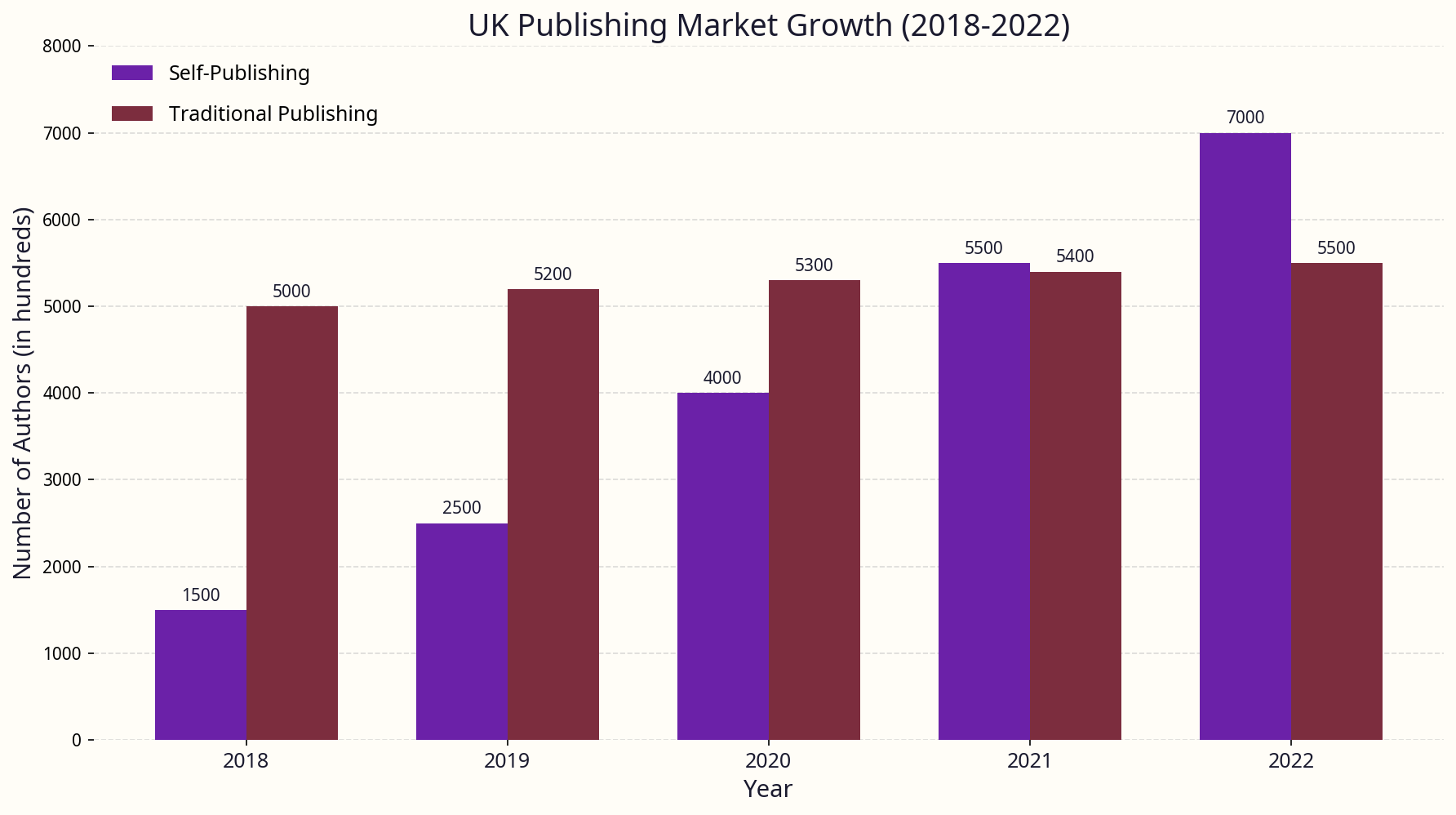
The UK self-publishing market has grown rapidly, with over 750,000 titles self-published in recent years and annual growth rates exceeding 15%. However, self-published authors must navigate the complexities of UK-specific ISBNs, VAT on ebooks, and retail standards.
Before building publishing.co.uk, I hired a so-called ’expert’ formatter for £130. The result was terrible. I tried Fiverr next, which was just as bad. The automated tools available at the time were awful. It was a headache before I even started marketing the book.
Terminology You Need to Know
- ISBN: International Standard Book Number, essential for retail distribution. In the UK, ISBNs are purchased exclusively from Nielsen Book Services at a cost.
- Print-on-Demand (POD): Printing books only as orders come in, avoiding large upfront print runs and inventory costs.
- Royalty: Percentage of sales paid to the author.
- Advance: Upfront payment against future royalties from traditional publishers.
- Distribution: How a book reaches retailers and customers.
- Formatting: Preparing your manuscript to meet technical requirements for print and ebook platforms.
- VAT (Value Added Tax): Tax applied to goods and services in the UK. Print books are zero-rated, but ebooks attract VAT, affecting pricing.
- Barcodes: EAN-13 format barcodes are required for physical books sold in UK retail.
Step-by-Step Guide to Both Routes
Self-Publishing Step-by-Step (UK Focus)
From my experience, self-publishing is a marathon, not a sprint. Here’s an expanded, practical breakdown:
- Writing and Editing:
- Complete your manuscript.
- Hire a UK-based professional editor specialising in your genre. Expect to pay £500–£2,000 depending on length and type (developmental, line, copy editing).
- Use platforms like Reedsy or contact UK editorial freelancers with proven track records.
- ISBN Purchase:
- Visit Nielsen ISBN Store to buy ISBNs. A single ISBN costs £93; a block of 10 costs £174.
- Purchase in advance to retain ‘publisher’ rights yourself, rather than using free ISBNs from Amazon which list Amazon as publisher.
- Formatting:
- Format print files (PDF) and ebook files (EPUB/MOBI).
- Use tools like Adobe InDesign or hire a UK-based formatter.
- Pay attention to UK-specific print sizes (B-format 129 x 198 mm is common for fiction).
- For Amazon KDP: Upload via KDP Bookshelf, choose Paperback > Create New Title, and follow prompts.
- Cover Design:
- Hire a professional UK designer or agency.
- Covers must comply with retailer specs (Amazon requires JPG 300 dpi; IngramSpark accepts PDF covers with bleed).
- Upload to Platforms:
- Amazon KDP: Submit print and ebook versions.
- IngramSpark: Upload print files for wider UK and international print distribution to bookshops and libraries.
- Kobo Writing Life: Upload EPUB for ebook sales in UK and Commonwealth territories.
- Marketing:
- Develop a launch plan: email list, social media, PR, and paid ads.
- Use Amazon Advertising dashboard to create targeted campaigns.
- Submit to UK review sites like LoveReading.co.uk (which I co-own) and Goodreads UK groups.
- Monitor Sales and Iterate:
- Use Amazon KDP Reports, IngramSpark Sales Dashboard, and Google Analytics for your author website.
- Adjust pricing, promotions, and marketing based on data.
Traditional Publishing Step-by-Step (UK Focus)
- Query Literary Agents:
- Research agents via Writers’ & Artists’ Yearbook or agent websites.
- Follow submission guidelines meticulously, usually sending a query letter and synopsis first.
- Secure an Agent:
- Agents vet your manuscript and help refine your proposal.
- They submit to suitable UK publishers.
- Submit Proposal:
- Publisher acquires rights after reviewing manuscript and market potential.
- Negotiate Contract:
- Contracts vary; agents negotiate advances (usually £1,000–£10,000 for debut UK authors) and royalty rates.
- Editorial Process:
- Collaborate with in-house editors for developmental and copy editing.
- Design and Production:
- Publishers handle cover design, typesetting, and print runs.
- Print runs are typically larger, with initial print runs of 1,000+ copies common.
- Distribution and Marketing:
- Publishers distribute to retail chains (Waterstones, WHSmith), independent bookshops, and libraries.
- Marketing campaigns vary from modest to extensive, depending on the publisher’s budget.
- Royalty Payments:
- Royalty statements delivered bi-annually or quarterly.
UK-Specific Considerations: Costs, ISBNs, and Market Realities
ISBNs and Barcodes: The UK Reality
UK authors must budget for ISBNs purchased from Nielsen Book Services:
- Single ISBN: £93 + VAT (£111.60 total)
- Block of 10 ISBNs: £174 + VAT (£208.80 total)
Unlike US authors who can buy single ISBNs from Bowker for less, UK authors face a steeper barrier to entry here. This cost is often overlooked but critical for maintaining control over your publishing imprint and distribution.
Barcodes (EAN-13) are automatically generated by Nielsen when purchasing ISBNs or can be created via barcode services for around £10–£20. They’re mandatory for physical retail sales in the UK.
Practical Tip: Buy a block of 10 ISBNs if you plan multiple books or editions — it halves the cost per ISBN and future-proofs your publishing.
Market Size and Distribution Channels
The UK publishing industry was worth £7.1 billion in 2023, with physical book sales still accounting for over 60% of revenue. Traditional publishers dominate physical retail and library sales, while self-published authors rely heavily on Amazon’s UK marketplace.
- Bookshops: Waterstones, WHSmith, and many independent bookshops prefer titles from established publishers or those distributed via Ingram or Gardners.
- Libraries: Require books with formal ISBNs and established distributors; self-published books without proper ISBNs or distribution channels struggle to enter.
- Online Sales: Amazon UK commands over 50% of ebook sales in the UK, making it the go-to platform for self-publishers.
- Ebook VAT: Print books are zero-rated for VAT, but ebooks attract 20% VAT in the UK, affecting pricing strategies.
VAT and Tax Implications
- Print Books: Zero-rated for VAT in the UK, meaning no VAT is charged to customers or paid to HMRC.
- Ebooks: Subject to 20% VAT, so pricing must factor this in or absorb the cost.
- Author Income: Royalties and advances are taxable income. Keep accurate records for HMRC self-assessment.
- Business Setup: Many UK authors set up as sole traders or limited companies for tax efficiency and professional credibility.
Cultural and Industry Nuances
- Lead Times: UK traditional publishers typically have longer lead times (6–12 months or more) than US counterparts.
- Prestige Factor: Traditional publishing still carries weight in UK literary circles, media, and awards.
- Bookshop Relationships: UK bookshops prize local author events, signed copies, and established publisher backing. Self-published authors often struggle to secure shelf space.
- Author Events: In the UK, festivals like Hay Festival and events at Waterstones provide visibility but often require publisher backing or agent representation.
Common Mistakes UK Authors Make and How to Avoid Them
Mistake #1: Underestimating Formatting Complexity
When preparing Google. Panic. Repeat., I faced endless frustration with Amazon KDP’s formatting requirements. Amazon demands PDFs for print that adhere to precise trim sizes, bleed, margins, and embedded fonts. Without professional formatting, you risk errors, rejected uploads, or poor print quality.
Avoidance Strategy:
- Invest £100–£300 in professional UK-based formatting.
- Use publishing.co.uk’s automated formatting tool that outputs KDP-ready PDFs and EPUBs with UK standard trim sizes like B-format (129 x 198 mm).
- Test proofs thoroughly before publishing.
Mistake #2: Ignoring ISBN Costs and Publisher Identity
Many UK self-publishers save money by using Amazon’s free ISBNs, which list Amazon as the publisher. This restricts your ability to distribute outside Amazon and complicates entering bookshops or libraries.
Avoidance Strategy:
- Buy your own ISBNs from Nielsen.
- Register your own imprint to maintain full publishing rights.
- This upfront cost pays dividends in distribution flexibility and professional credibility.
Mistake #3: Failing to Account for Time and Effort
Self-publishing is often portrayed as instant gratification, but it’s a full-time job. Editing, formatting, cover design, uploading, and marketing consume hundreds of hours.
Avoidance Strategy:
- Build a realistic project timeline of 3–6 months minimum.
- Use project management tools like Trello or Asana to organise tasks.
- Outsource repetitive or technical tasks to professionals or use automated platforms.
Mistake #4: Overlooking Marketing
Publishing your book is half the battle; marketing is the other half. Many UK authors mistakenly think a professional cover and a good book will sell themselves.
Avoidance Strategy:
- Invest in Amazon PPC advertising campaigns, starting with £50–£100 monthly to learn targeting.
- Build an email list early and engage readers with newsletters.
- Leverage UK-focused review sites like LoveReading.co.uk, which I co-own, and Goodreads UK groups.
Mistake #5: Using Cheap or Unvetted Services
Avoid £5 Fiverr gigs that offer formatting or cover design without UK market knowledge. Many use stolen images or produce low-quality outputs that hurt your brand.
Avoidance Strategy:
- Use UK-based professionals or vetted agencies like Spiffing Publishing or automated services like publishing.co.uk.
- Check portfolios and client testimonials carefully.
Essential Tools and Resources for UK Authors
Formatting Tools
- Microsoft Word:
- For print books, set trim size via Layout > Size > More Paper Sizes.
- Custom margins for gutter: Layout > Margins > Custom Margins (e.g., 0.5 inch gutter for binding).
- Export to PDF with embedded fonts via File > Save As > PDF > Options.
- Adobe InDesign:
- Industry standard for professional typesetting; steep learning curve but powerful.
- Use preset B-format templates for UK paperback sizes.
- Calibre & Sigil:
- Free tools for ebook conversion and editing, useful for EPUB formatting.
- publishing.co.uk:
- Automated UK-compliant formatting for print and ebook, tailored for Amazon KDP and IngramSpark specs.
- Saves hours and reduces errors.
Cover Design
- Canva Pro:
- Useful for DIY authors with templates but limited flexibility for print covers with spine and bleed.
- Professional Designers:
- UK-based designers typically charge £300–£600.
- Agencies like Spiffing Publishing or independent freelancers on Reedsy offer genre-specific expertise.
- Stock Image Sites:
- Use licensed images from Shutterstock, Adobe Stock, or UK-specific resources like Alamy to avoid copyright issues.
Distribution Platforms
- Amazon KDP:
- Dominates UK ebook and print-on-demand.
- Use the KDP dashboard to upload print and ebook files and manage pricing.
- IngramSpark:
- Essential for wider print distribution to UK bookshops and libraries.
- Setup fee £49 per title, with a 15% discount on print cost via distribution.
- Kobo Writing Life:
- Growing UK and Commonwealth ebook platform with good royalty rates.
- Apple Books:
- Important for reaching UK Apple users, requires a Mac or aggregator like Draft2Digital.
Marketing Tools
- Amazon Ads:
- PPC campaigns via KDP dashboard. Start small and refine keywords based on data.
- BookBub:
- Paid and free promotions with a large UK subscriber base for genre fiction.
- Goodreads & LoveReading:
- Engage with UK-focused reader communities and request reviews.
- Social Media:
- Use Twitter, Instagram, and TikTok with UK hashtags (#AmWritingUK, #SelfPubUK).
- Email Marketing:
- Platforms like Mailchimp or ConvertKit to build and maintain reader lists.
Cost Breakdown: Real GBP Figures for UK Authors
| Expense Category | Traditional Publishing (Author Cost) | Self-Publishing (Author Cost) |
|---|---|---|
| ISBN | Usually covered by publisher | £93 (single) or £174 (block of 10) via Nielsen |
| Editing | Usually provided | £500–£2,000+ depending on service |
| Cover Design | Provided | £300–£600 for professional design |
| Formatting | Provided | £100–£300 for professional or automated service |
| Printing (POD per copy) | Publisher covers | £2–£4 per copy, varies by page count and trim size |
| Marketing | Publisher marketing varies | £0–£1,000+ depending on ad spend and campaigns |
| Distribution Fees | Publisher covers | IngramSpark charge £49 setup + 15% print cost |
| Advance | Paid to author | None |
Note: Traditional publishing usually requires no upfront investment but offers lower royalties and less control. Self-publishing demands upfront cash but offers higher royalties (up to 70% on Amazon KDP ebooks) and full rights ownership.
Example Scenario:
Self-publishing a 300-page paperback and ebook with professional editing, cover design, formatting, ISBNs, and a modest marketing budget would cost around £1,500–£3,000 upfront in the UK.
Alternative Approaches and Hybrid Models in the UK Market
While the debate often frames self-publishing and traditional publishing as mutually exclusive, UK authors increasingly explore hybrid models:
- Vanity Presses:
- Authors pay publishers upfront for a package of services. Beware of poor value and lack of distribution.
- Subsidy Publishing:
- Similar to vanity, but with a reputation for higher quality and some distribution. Cost £1,000–£5,000+ upfront.
- Small Independent Publishers:
- Offer more personalised attention than Big Five, sometimes open to unsolicited submissions.
- Co-Publishing or Partnership Agreements:
- Authors share costs and profits with a small publisher or service provider.
- Print-Only Self-Publishing + Ebook via Traditional Publisher:
- Some authors negotiate split rights to maximise reach and revenue streams.
Practical Advice:
- Research any hybrid or subsidy press thoroughly before committing money.
- Prefer transparent contracts with clear rights and royalty terms.
- Hybrid models often suit niche or business authors with a marketing budget who want some publisher support but retain control.
Real-World Case Studies and Examples
Case Study 1: Debut UK Fiction Author – Traditional Route
Sarah, a debut novelist from Manchester, secured a literary agent after multiple queries over 18 months. Her agent sold her manuscript to a mid-sized London publisher. The process took 12 months from contract to publication. Sarah received a £5,000 advance and a 10% royalty on print sales.
- Outcome:
- Her book appeared in Waterstones and independent shops.
- Marketing was modest but included a book tour and festival appearances.
- Royalties took 2 years to recoup advance.
Case Study 2: UK Business Author – Self-Publishing
Mark, a London-based business consultant, self-published a guide on digital marketing. He invested £1,800 in editing, ISBNs, formatting, and cover design. He used Amazon KDP and IngramSpark for distribution and spent £600 on Amazon Ads.
- Outcome:
- Sold 4,000 copies in 18 months, mostly ebooks.
- Retained 70% royalties on ebook sales and 40% on print.
- Profitable after 12 months with full control over pricing and rights.
Case Study 3: Hybrid Author
Emma, a YA author, self-published her first two novels, building a strong online following. A small UK indie publisher offered a co-publishing deal for her third book with print distribution and editorial support. She split costs and royalties.
- Outcome:
- Wider physical distribution and better marketing reach.
- Maintained digital rights and creative control.
- Sales improved by 35% compared to self-published titles.
Expert Insights from 25 Years in eCommerce and Publishing
Having consulted billion-pound businesses and run a large Amazon agency (MrPrime.com), I know that publishing is a commercial endeavour first and foremost. The biggest mistake authors make is treating it like a hobby.
- Data-Driven Decisions: Track your sales channels and marketing ROI rigorously. Use Amazon KDP reports, IngramSpark dashboards, and Google Analytics to inform your strategy.
- Leverage Automation: Services like publishing.co.uk automate UK-compliant formatting, saving hours and reducing costly errors.
- Retain Rights: Owning your ISBNs and publishing imprint is crucial for long-term control and revenue.
- Think Beyond Amazon: While dominant, diversify with IngramSpark for print and Kobo for further ebook reach, especially across the Commonwealth.
- Invest in Professional Help: Whether editing, design, or marketing, cheap shortcuts cost more in the long run. I’ve seen authors waste thousands chasing £5 Fiverr gigs that deliver unusable files.
- Understand VAT and Tax: Ensure your pricing reflects VAT on ebooks and keep accurate financial records for HMRC.
When I self-published Google. Panic. Repeat., the process was a grind. The formatting headaches alone cost me hours I could have spent writing or marketing. That experience fuelled the creation of publishing.co.uk—so UK authors don’t have to suffer the same frustrations.
Frequently Asked Questions
1. What is the most common mistake UK authors make with self-publishing vs traditional publishing?
Many UK authors underestimate the complexity and cost of professional formatting and editing. They also often rely on free Amazon ISBNs, which limits their control and distribution options. Skipping marketing and under-budgeting time are other frequent errors.
2. How much does self-publishing vs traditional publishing cost in the UK?
Traditional publishing usually has no upfront cost but offers lower royalties. Self-publishing requires upfront investment — expect £1,000–£3,000 for professional editing, formatting, cover design, and ISBNs. Marketing costs vary widely.
3. What tools do UK authors recommend for self-publishing vs traditional publishing?
Microsoft Word with precise margin settings is useful for drafts. For professional formatting, services like publishing.co.uk save time and ensure compliance with UK print standards. Amazon KDP and IngramSpark are key distribution platforms for UK authors.
4. How long does the self-publishing vs traditional publishing process typically take?
Traditional publishing can take 6–12 months or longer from submission to publication. Self-publishing can be completed in a few weeks but requires significant preparation and project management.
5. Can I handle self-publishing vs traditional publishing myself or should I hire a professional?
You can do it yourself but expect a steep learning curve and technical headaches, especially with formatting and ISBN registration. Hiring professionals or using automated UK-focused services ensures quality and saves time.
6. What are the UK-specific requirements for self-publishing vs traditional publishing?
UK authors must budget for Nielsen ISBNs, consider VAT implications (ebooks attract 20% VAT), abide by UK retail barcode standards, and understand local market distribution preferences emphasizing physical bookshops and libraries.
About the Author
Robert Prime is a best-selling self-published author, veteran eCommerce strategist, and the founder of publishing.co.uk. With over 25 years of experience in digital business and 15 successful exits, he brings a battle-tested perspective to the publishing industry. After experiencing firsthand the archaic, headache-inducing process of formatting a KDP-compliant book for his own best-seller, Google. Panic. Repeat., Robert built publishing.co.uk to solve the problem for other authors. He is also a co-owner of the LoveReading.co.uk network (the UK’s largest book review platform), founder of the Amazon growth agency MrPrime.com, and a member of the Forbes Business Council.
This guide aims to empower UK authors with clear, practical, and business-oriented advice that cuts through the noise and gets results. Your publishing journey is your business—treat it like one.