How to Use Social Media to Sell Your Self-Published Book
By Robert Prime
Last reviewed by Robert Prime — March 2026
Table of Contents
- Introduction: Why Social Media Matters for UK Authors
- What You Need to Know Before Starting
- Step-by-Step Guide to Social Media Book Marketing
- UK-Specific Considerations
- Common Mistakes and How to Avoid Them
- Tools and Resources for UK Authors
- Cost Breakdown: What Social Media Book Marketing Will Set You Back in the UK
- Expert Tips from 25 Years in eCommerce and Publishing
- Real-World Case Studies from the UK
- Comparison with Alternative Marketing Approaches
- Frequently Asked Questions
Introduction: Why Social Media Matters for UK Authors
Social media book marketing is no longer a nice-to-have; it’s a fundamental part of any self-published author’s strategy in the UK. The UK publishing industry generated £7.1 billion in revenue last year, with self-published titles growing by 68% over the past five years. Yet, despite this growth, many UK authors underestimate the power of social platforms or approach them with outdated tactics borrowed from US-centric advice.
From my own experience, when I published Google. Panic. Repeat. I found that writing the book was only the start. The real challenge was getting it noticed. Social media offers an unparalleled way to build an audience, engage readers, and ultimately drive sales, but only if you approach it with a clear plan rooted in the realities of the UK market.
When I was formatting Google. Panic. Repeat., I wasted hours on KDP compliance issues that delayed my marketing launch. That experience taught me that social media marketing success depends not just on posting but on having a fully optimised product ready to sell. This is why I built publishing.co.uk—to help authors get past the technical headaches and focus on marketing.
This comprehensive guide will walk you through what social media book marketing actually involves, how to do it step-by-step, and crucially, how to adapt your approach to the UK context, with practical advice on costs, tools, and pitfalls. Unlike many generic guides, I’ll share real-world UK-specific insights, pricing, case studies, and business-oriented advice to help you make informed decisions.
What You Need to Know Before Starting
Before jumping headfirst into social media marketing, it’s essential to understand a few core concepts and set realistic expectations.
Social Media Book Marketing Defined
At its core, social media book marketing means using platforms like Facebook, Instagram, Twitter, TikTok, and LinkedIn to promote your book. This includes organic posts, paid ads, influencer collaborations, and community engagement. But in the UK, success depends on knowing your platforms, your audience, and the practicalities of marketing here.
The UK Market Dynamic
- The UK self-publishing market is maturing but still underserved in terms of tailored marketing advice and resources.
- UK readers differ from American audiences in tastes, buying habits, and platform preferences — what works in the US won’t necessarily fly here.
- Currency considerations mean ad spends, tools, and services require careful budgeting in GBP, and fluctuating exchange rates impact costs when paying for international services.
- VAT and other tax rules affect pricing strategies for ebooks and print books.
Terminology to Know
- Organic Reach: The number of people who see your posts without paid promotion.
- Paid Reach: Exposure gained through advertising spend.
- Engagement Rate: The percentage of your audience interacting with your content.
- PPC (Pay-Per-Click): Model where you pay for each click on your ad.
- Lookalike Audiences: Targeting people similar to your existing followers or buyers.
- Hashtags: Tags to group content and increase discoverability.
- Call to Action (CTA): Prompt encouraging users to take a specific action (e.g., buy, share).
- Content Calendar: A schedule for planning and publishing posts.
- ISBN: International Standard Book Number, critical for book identification, especially in the UK.
Why It’s Not Just About Posting
Social media isn’t about random posts or flooding your feed; it’s a strategic funnel. You need to build awareness, create interest, and guide potential readers toward purchase. This requires a blend of content types, engagement tactics, and advertising.
Step-by-Step Guide to Social Media Book Marketing
Step 1: Define Your Target Audience
The first step is to identify who your ideal readers are. This means considering demographics (age, gender, location), interests, and where they hang out online.
For example, my own book Google. Panic. Repeat. targeted UK-based digital marketers aged 25-45, primarily on LinkedIn and Twitter. But for a UK historical fiction author, Facebook groups focused on British history or Instagram communities around period dramas might be more appropriate.
How to do it practically:
- Use Facebook Audience Insights (via Facebook Ads Manager) to research UK-specific demographics interested in your genre.
- Look at UK Goodreads groups and LoveReading.co.uk forums to see who discusses books like yours.
- Use Twitter Advanced Search filtering for UK locations and relevant hashtags.
Tip: Create a simple persona document — name, age, job, favourite books, social platforms used — to keep your audience in mind as you create content.
Step 2: Choose the Right Platforms
Not all platforms suit every author or genre. In the UK:
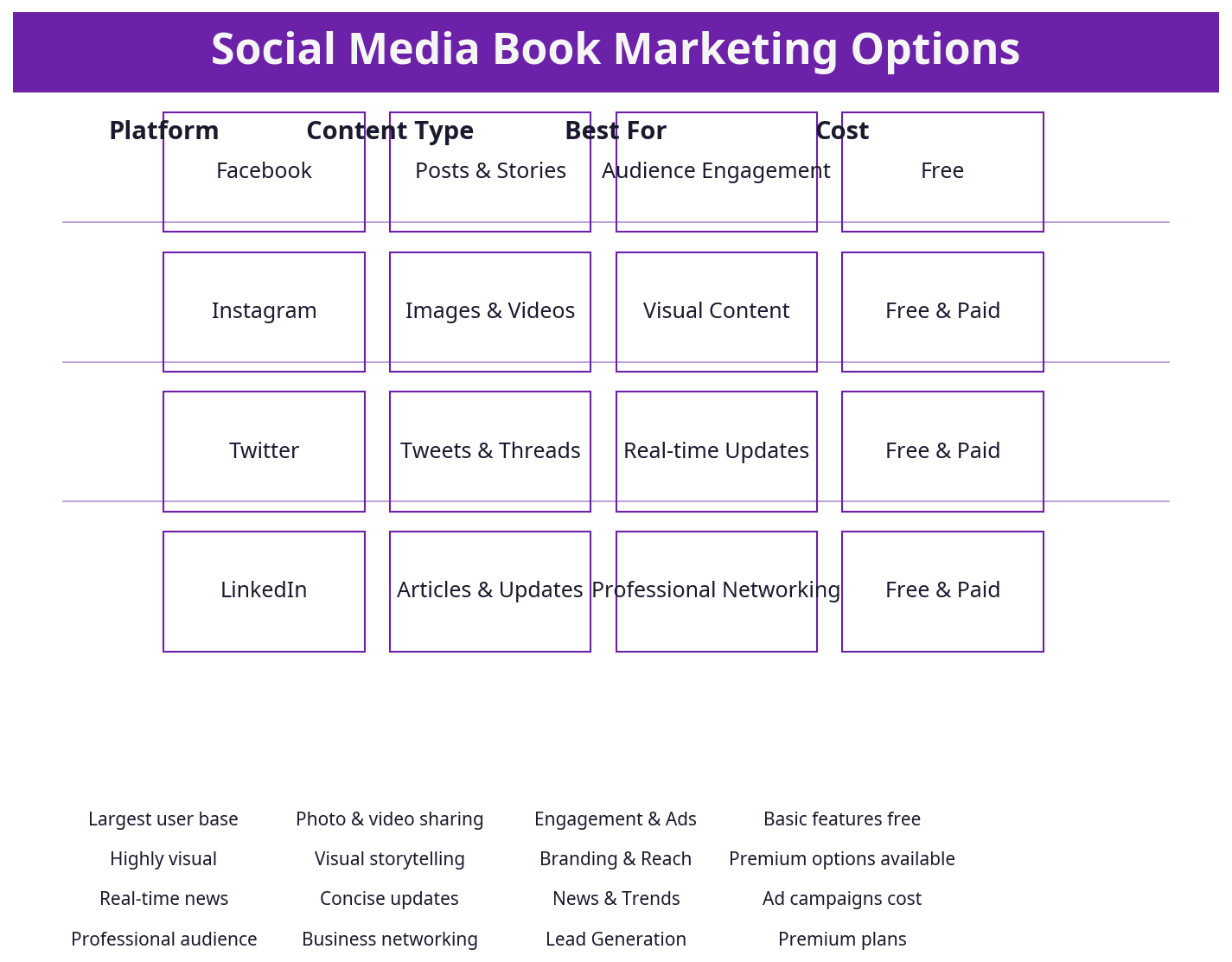
- Facebook: Still dominant for the 35+ demographic, especially for genres like crime, romance, and non-fiction.
- Instagram: Great for visual storytelling, younger audiences, and building brand identity, especially for YA fiction, cookbooks, and lifestyle genres.
- TikTok: Exploded in popularity with #BookTok, especially among 18-30-year-olds. UK authors are increasingly seeing viral success here, but it requires a fresh, authentic video approach.
- Twitter: Useful for networking with UK authors, reviewers, journalists, and industry insiders.
- LinkedIn: Ideal for non-fiction, business, and professional authors. UK professionals use LinkedIn actively during work hours, so plan posts accordingly.
Platform selection guide:
| Genre / Focus | Best UK Platforms | Notes |
|---|---|---|
| Crime, Thriller | Facebook, Twitter | Facebook groups are very active in the UK |
| YA & Young Adult | TikTok, Instagram | UK #BookTok communities growing fast |
| Non-fiction / Business | LinkedIn, Twitter | UK professionals engage well on LinkedIn |
| Romance & Women’s Fiction | Facebook, Instagram | Facebook groups and Instagram stories popular |
| Historical Fiction | Facebook, Instagram | Visual content and community groups |
Step 3: Build Your Author Profile
Create or optimise your social media profiles with professional author photos, consistent branding, and clear bios mentioning your book and where to buy it.
A UK-specific tip: Include your UK-based author website or a link aggregator (e.g., Linktree) that lists UK retailers like Waterstones and independent bookstores alongside Amazon UK.
How to update profiles step-by-step:
- Facebook: Go to your profile → About → Edit Profile. Add your book title, a link to buy, and a short bio mentioning your UK connection.
- Instagram: Tap Edit Profile → Bio. Use hashtags like #UKAuthor #SelfPublishedUK.
- Twitter: Click Profile → Edit Profile → Bio. Add a link to your book’s UK retailer page.
- LinkedIn: Profile → About → Add summary with book info and UK-specific selling points.
Consistency across platforms builds brand recognition. Use the same photo and author name formatting.
Step 4: Develop a Content Plan
Plan a mix of content types to engage different parts of your audience:
- Promotional posts: Announce your book launch, run limited-time discounts, host giveaways specifically for UK readers.
- Engagement posts: Ask questions about topics related to your book or genre; run polls; share behind-the-scenes insights into your writing process.
- Value posts: Share excerpts, writing tips, historical facts (if relevant), or UK-centric insights.
- User-generated content: Share reader reviews, photos of your book in UK settings, or fan art.
Step-by-step to create a content calendar:
- Open Google Sheets or Excel.
- Create columns: Date, Platform, Content Type, Post Text, Image/Video, CTA, Status.
- Plan posts at least 4 weeks in advance, mixing content types.
- Schedule posts using Buffer or Hootsuite (see Tools section).
Example: For a UK crime thriller, schedule a weekly “Did you know?” post featuring a true UK crime fact related to your novel.
Step 5: Engage Actively
Social media is a two-way street. Reply to comments, join relevant groups (e.g., UK author communities), and engage with influencers and readers.
How I do it:
- Join niche UK Facebook groups like UK Self-Publishing Authors or London Writers Network.
- Follow and interact with UK-based book bloggers and reviewers.
- Respond promptly to comments and messages, showing appreciation and building rapport.
- Use Twitter lists to track UK literary agents, journalists, and authors.
Pro Tip: Set aside 15 minutes daily for engagement. Quality interactions build your network and increase organic reach.
Step 6: Leverage Paid Advertising
Organic reach has declined dramatically on most platforms, making paid ads necessary to cut through the noise.
UK-specific paid ad tips:
- Start small with £5-£10 daily budgets to test.
- Use Facebook Ads Manager to create campaigns targeting UK readers by age, location, interests, and behaviours.
- Use Instagram Ads linked to Facebook campaigns for seamless cross-platform promotion.
- TikTok Ads can be powerful but require creative, native-feeling video content.
- Use A/B testing to optimise ad copy, images, and targeting with small budget increments.
Step-by-step Facebook ad setup for UK targeting:
- Go to Facebook Ads Manager.
- Click “Create” → Choose campaign objective (e.g., Traffic or Conversions).
- Set campaign name (e.g., “UK Book Launch Campaign”).
- Define your audience:
- Location: United Kingdom
- Age: Based on your target reader persona
- Interests: e.g., Crime fiction, Book clubs, UK authors
- Set budget and schedule (start with £5-£10/day for 7 days).
- Upload creatives (images or videos).
- Write compelling ad copy with a clear CTA (“Buy now on Amazon UK”).
- Review and publish.
Monitor daily and pause ads that underperform.
Step 7: Track and Analyse Results
Use platform analytics and external tools to monitor impressions, clicks, conversions, and ROI.
UK-specific note: If you sell on multiple platforms (Amazon UK, Waterstones, or direct via your website), use UTM parameters in your ad URLs to track which ads drive sales.
Tools to use:
- Facebook Insights: For Facebook and Instagram.
- TikTok Analytics: For video performance.
- Twitter Analytics: For engagement metrics.
- Google Analytics: Track website traffic from social media campaigns.
Regularly review data and adjust:
- Which posts get most engagement?
- Which ads deliver best ROI?
- What time of day drives highest interaction in the UK timezone?
UK-Specific Considerations
ISBN and Metadata: The Real Costs and Choices
Unlike in the US where Bowker sells ISBNs at around $125 each, in the UK you buy ISBNs from Nielsen Book Services. The pricing is steep:
- Single ISBN: £93 + VAT
- Block of 10 ISBNs: £174 + VAT
These are essential for print books and important for metadata management in UK book databases and retailers.
Why pay for your own ISBN?
Using a free KDP ISBN means Amazon is listed as the publisher, which affects your brand presence and limits your control over distribution metadata. For UK authors seeking wider distribution (e.g., Waterstones, Gardners), owning your ISBN is vital.
Practical advice:
If you plan multiple books, buy a block of 10 ISBNs to save money. Factor this cost into your social media marketing budget and overall launch plan.
VAT and Pricing
- Print books are zero-rated for VAT in the UK, so you don’t add VAT on print book sales.
- Ebooks are subject to VAT at the standard 20% rate if sold directly to UK customers.
- Platforms like Amazon UK handle VAT automatically, but if you sell direct, you must factor VAT into your pricing.
Pricing tip:
Advertise your book price clearly in GBP (£), and if you run ads, tailor your offers to VAT-inclusive pricing so UK buyers see accurate costs.
UK Market Nuances
- UK readers have a strong preference for genres like crime thrillers, historical fiction, and literary fiction.
- UK social media usage peaks during weekday evenings (5-9 pm GMT), so schedule posts accordingly.
- WhatsApp and Snapchat are widely used but less effective for book marketing since they’re private or ephemeral platforms.
- Facebook groups dedicated to UK authors and readers are goldmines for promotion and feedback.
Example: I’ve seen authors gain traction by joining the UK Thriller Writers Facebook group, sharing authentic insights rather than hard sales pitches.
Advertising Costs in GBP: What to Expect
| Platform | Typical UK CPC (£) | Typical CPM (£) | Notes |
|---|---|---|---|
| £0.30 - £1.00 | £5 - £12 | Dependent on targeting precision | |
| £0.40 - £1.20 | £6 - £14 | Slightly higher cost than Facebook | |
| TikTok | £0.50 - £1.50 | £7 - £15 | Younger audiences, viral potential |
| £0.25 - £0.85 | £4 - £10 | Good for networking and events | |
| £1.50 - £3.50 | £20 - £50 | Expensive, best for business books |
Tip: Don’t throw large budgets blindly. Start small, test, and analyse ROI before scaling.
Common Mistakes and How to Avoid Them
Mistake 1: Posting Without a Plan
Random posting wastes time and money. A content calendar aligned with your book launch timeline is crucial. I once saw an author post 20 times in one day and then nothing for weeks — this creates audience fatigue and confusion.
Mistake 2: Over-Reliance on Organic Reach
Facebook and Instagram’s algorithms have crushed organic reach. Without paid ads, even great content can go unseen by most of your followers.
Mistake 3: Targeting Too Broadly or Narrowly
Avoid generic targeting like “all book lovers UK.” Use data-driven audience profiles for precision. For example, targeting “UK crime fiction book buyers aged 30-50” is more effective.
Mistake 4: Ignoring Analytics
Many authors post blindly. Without tracking engagement and conversion metrics, you won’t know what’s working or failing.
Mistake 5: DIY Formatting and Marketing Disconnect
I learned this the hard way with Google. Panic. Repeat. I spent hours battling KDP formatting issues with no marketing synergy. A well-formatted book from the start (hint: publishing.co.uk can help) means your social media ads convert better because the product experience matches the promise.
Mistake 6: Neglecting UK Cultural Context
Copying US-centric marketing messages without localisation can alienate UK readers. Use UK spelling, references, and cultural touchpoints to build connection.
Tools and Resources for UK Authors
Content Creation
- Canva Pro: For professional graphics and social media images. Very popular with UK authors for creating book promo visuals.
- Adobe Spark: Alternative for quick, polished content.
- Lumen5: Turns blog posts into video content ideal for TikTok and Instagram Reels.
Scheduling and Automation
- Buffer: Simple scheduling for multiple platforms.
- Hootsuite: More robust with analytics and team collaboration.
- Later: Excellent for Instagram-focused campaigns, supports scheduling Stories.
Analytics
- Facebook Insights: Native analytics for Facebook and Instagram.
- TikTok Analytics: For video performance.
- Google Analytics: Track website traffic from social media.
Advertising
- Facebook Ads Manager: Central hub for Facebook and Instagram ads.
- TikTok Ads Manager: Emerging platform for paid campaigns.
- AdEspresso: Simplifies Facebook ad testing and optimisation.
UK-Specific Resources
- Nielsen Book Services: ISBN purchase and metadata guidance.
- LoveReading.co.uk: UK-centric book discovery and reviews (I co-own this).
- The Society of Authors: Guidance on rights, contracts, and marketing.
- The Publishers Association: Industry insights and market data.
- Waterstones Author Services: For UK retail marketing opportunities.
Cost Breakdown: What Social Media Book Marketing Will Set You Back in the UK
Understanding the real costs involved is vital for budgeting your book launch. Here’s a detailed breakdown based on my experience and UK market norms:
| Item | Typical UK Cost (£) | Notes |
|---|---|---|
| ISBN (single) | 93 (+ VAT) | From Nielsen, essential for discoverability |
| ISBN (block of 10) | 174 (+ VAT) | More cost-effective for multiple titles |
| Professional Cover Design | 300 - 600 | UK average range for quality design |
| Professional Formatting | 80 - 150 | Automated services like publishing.co.uk offer transparent pricing |
| Social Media Ads | 150 - 500+ per campaign | Depends on platform and campaign length |
| Scheduling Tools | 0 - 30 per month | Many have free tiers with limits |
| Content Creation Software | 0 - 12 per month | Canva Pro subscription is popular |
| Influencer Partnerships | 50 - 200+ per post | UK influencer rates vary widely |
| PR and Book Reviews | 100 - 500 | For UK-specific review services or PR agencies |
Budgeting advice:
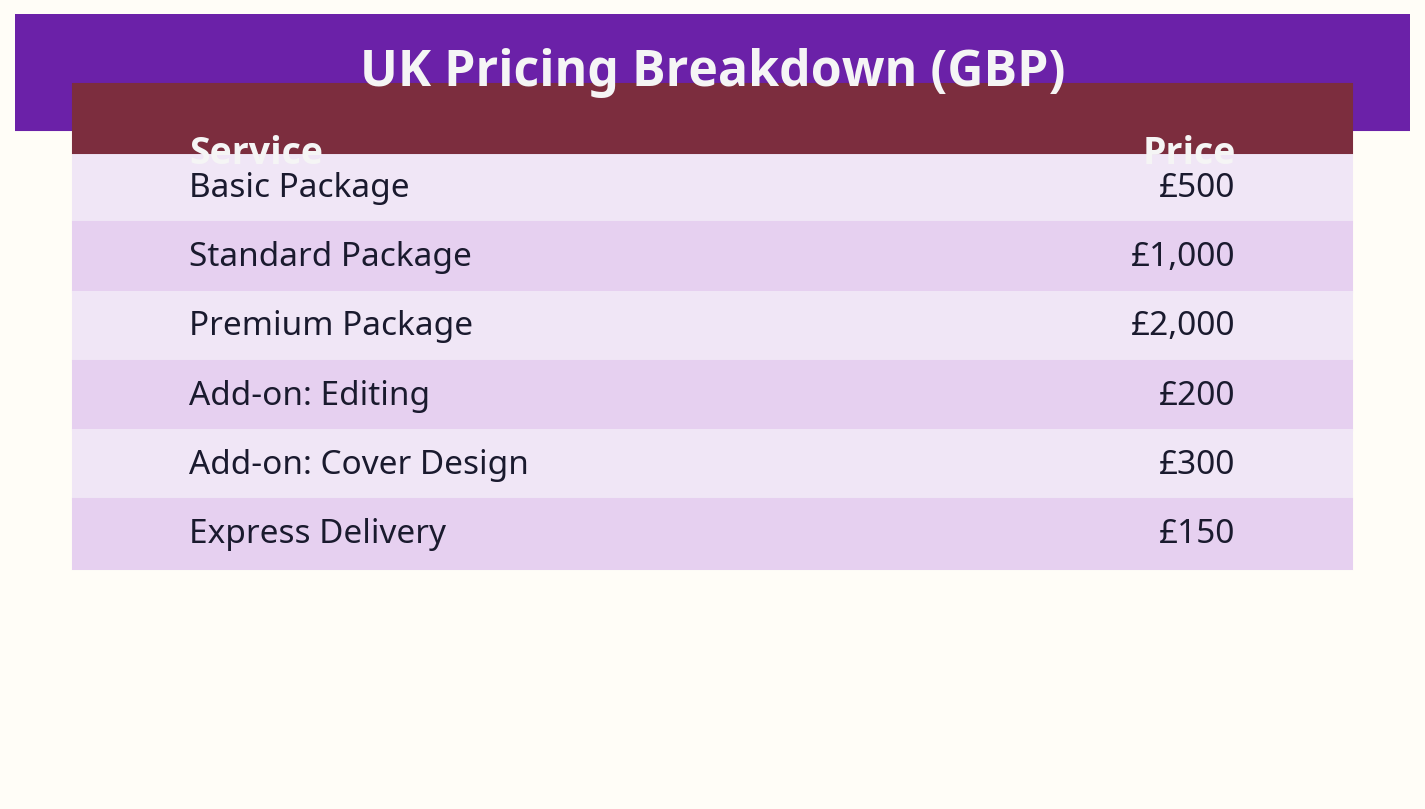
Plan for at least £500-£1,000 for a modest launch campaign covering ads, ISBN, cover, and formatting. Larger campaigns with influencers and PR can easily reach £2,000+.
Expert Tips from 25 Years in eCommerce and Publishing
Don’t Underestimate Data
In eCommerce, everything is tracked — clicks, conversions, customer behaviour. Too many authors treat social media marketing like guessing. Use data from day one to refine your approach.
Align Your Book Formatting and Marketing
When I was formatting Google. Panic. Repeat., I wasted hours because the files weren’t KDP-compliant, which delayed marketing launches. If your book file isn’t flawless, you’ll lose sales momentum. This is why I built publishing.co.uk — to eliminate formatting headaches so authors can focus on marketing.
Build Relationships, Not Just Followers
The UK market thrives on trust and community. Engage genuinely in UK author groups, respond to readers, and build a mailing list to complement social media.
Don’t Ignore Video Content
TikTok and Instagram Reels are where discoverability is happening. Short, authentic videos about your writing process or book themes outperform static posts.
Budget Wisely
Start with modest ad spends, learn what works, then scale. UK ad costs fluctuate, so monitor daily and pause ineffective campaigns.
Quality Over Quantity
It’s better to have a few quality posts that resonate than a flood of generic content. Use publishing.co.uk’s formatting to ensure your book looks professional — consistency in quality across book and marketing builds credibility.
Real-World Case Studies from the UK
Case Study 1: Crime Thriller Author Using Facebook Groups
Helen, a UK-based crime thriller author, used targeted Facebook groups like UK Crime Writers and Readers to build engagement. By posting weekly excerpts tied to real UK locations and engaging in group discussions, she grew a loyal community. She supplemented organic engagement with a £200 Facebook ad campaign targeting UK crime fiction fans aged 30-55. The campaign delivered a 3:1 ROI within 6 weeks, with sales on Amazon UK and direct website purchases.
Key takeaway: Niche UK Facebook groups combined with modest ad spend can create strong sales spikes.
Case Study 2: YA Fiction Author Leveraging TikTok
Jamie, a London-based YA author, tapped into the UK #BookTok community with short videos about character motivations and writing challenges. He invested £300 in TikTok ads, targeting 16-24-year-olds in the UK interested in fantasy and YA fiction. His videos gained over 50,000 views within a month, resulting in a surge of ebook sales on Amazon UK and requests for school events.
Key takeaway: TikTok’s native video style and UK-specific targeting can generate viral awareness for YA authors.
Case Study 3: Non-Fiction Business Book on LinkedIn
Sophie, a Manchester-based business coach, used LinkedIn to promote her self-published book on leadership. She posted weekly articles, client success stories, and hosted live Q&A sessions. Running a targeted LinkedIn ad campaign with a modest budget of £400 focused on UK business owners aged 30-50, she generated high-quality leads and sold over 300 copies in 3 months.
Key takeaway: LinkedIn is the premier platform for UK non-fiction authors targeting professionals, though ad costs are higher.
Comparison with Alternative Marketing Approaches
| Approach | Pros | Cons | UK Market Suitability |
|---|---|---|---|
| Social Media Marketing | Cost-effective, direct audience targeting | Time-consuming, requires ongoing effort | High – essential for most genres |
| Paid Book Reviews | Third-party validation, reach niche readers | Can be costly, mixed ROI | Moderate – depends on reviewer reputation |
| Email Marketing | Direct, builds loyal audience | Requires list building, content creation | High – complements social media |
| Traditional PR | Potential for broad media exposure | Expensive, difficult to secure UK coverage | Low to Moderate – niche authors only |
| Book Fairs & Events | Personal interaction, local exposure | Costly, limited reach outside event | Moderate – good for UK regional authors |
| Amazon Advertising | Access to largest UK book marketplace | High competition, limited branding control | High – essential for Amazon sellers |
Conclusion: Social media marketing is the backbone of a modern UK book launch, but it works best when combined with email marketing and selective PR efforts.
Frequently Asked Questions
What is the most common mistake UK authors make with social media book marketing?
The most frequent error is not tailoring their content and ads to the UK audience. Many copy US-centric advice without adapting language, cultural references, or platform preferences, resulting in poor engagement.
How much does social media book marketing cost in the UK?
Costs vary widely, but expect to spend at least £150-£500 per advertising campaign, plus £80-£150 for professional formatting, and optional costs for cover design and content creation tools. Free organic efforts are possible but limited in reach.
What tools do UK authors recommend for social media book marketing?
Popular tools include Canva Pro for design, Facebook Ads Manager for paid campaigns, Buffer or Hootsuite for scheduling, and Nielsen for ISBN purchase. LoveReading.co.uk is also an excellent UK-specific platform for reviews and exposure.
How long does the social media book marketing process typically take?
A launch campaign can span 4-8 weeks, including pre-launch teasers, launch day promotions, and post-launch engagement. Building a following organically is a longer-term effort and ongoing.
Can I handle social media book marketing myself or should I hire a professional?
It depends on your skills and time. Many UK authors start DIY but quickly find managing content, ads, and analytics overwhelming. Hiring professionals or using automated services (including formatting at publishing.co.uk) can save time and improve results.
What are the UK-specific requirements for social media book marketing?
UK authors must consider regional data laws (UK GDPR), cultural relevance in messaging, currency pricing in £, and using UK ISBNs for better metadata management. Also, understanding VAT rules on book pricing is essential.
How do I set up UK-specific targeting in Facebook Ads Manager?
- Go to Facebook Ads Manager → Create Campaign.
- Under ‘Audience’, click ‘Locations’.
- Type “United Kingdom” and select it.
- Adjust age, gender, and detailed targeting to UK demographics.
- Save your audience for future campaigns.
Are UK influencer partnerships cost-effective for book marketing?
Influencer rates vary widely (£50-£200+ per post), but micro-influencers (1k-10k followers) focused on UK book communities can deliver good ROI with authentic promotion. Always request media kits and previous campaign results before committing.
How important is using a UK ISBN versus a free Amazon ISBN?
Using your own UK ISBN (£93 each) ensures you retain publisher rights, improves metadata accuracy across UK retailers, and enhances discoverability, especially for print and wider distribution beyond Amazon. Free Amazon ISBNs list Amazon as publisher, limiting options.
About the Author
Robert Prime is a best-selling self-published author, veteran eCommerce strategist, and the founder of publishing.co.uk. With over 25 years of experience in digital business and 15 successful exits, he brings a battle-tested perspective to the publishing industry. After experiencing firsthand the archaic, headache-inducing process of formatting a KDP-compliant book for his own best-seller, Google. Panic. Repeat., Robert built publishing.co.uk to solve the problem for other authors. He is also a co-owner of the LoveReading.co.uk network (the UK’s largest book review platform), founder of the Amazon growth agency MrPrime.com, and a member of the Forbes Business Council.
This guide aims to equip UK self-published authors with actionable, business-oriented strategies for social media book marketing — grounded in real costs, market realities, and practical experience.