How to Price Your Self-Published Book
By Robert Prime
Last reviewed by Robert Prime — March 2026
Table of Contents
- Introduction
- What You Need to Know Before Starting
- Step-by-Step Guide to Pricing Your Self-Published Book
- UK-Specific Considerations for Book Pricing
- Common Mistakes and How to Avoid Them
- Tools and Resources for Self-Published Book Pricing
- Cost Breakdown: Real UK Pricing in GBP
- Real-World Case Studies and Pricing Examples
- Expert Tips from 25 Years in eCommerce and Publishing
- Frequently Asked Questions
Introduction
Setting the right price for your self-published book is one of the most critical business decisions you’ll make as an author. Too high, and you risk scaring off readers; too low, and you may leave money on the table or devalue your work. Yet, pricing is rarely straightforward, especially in the UK market where many industry resources are US-centric and overlook local specifics like Nielsen ISBN costs, VAT rules, and Amazon UK’s marketplace nuances.
I know the pain well. When I published Google. Panic. Repeat., I was more than comfortable with digital business, yet the process of pricing my book was a headache I didn’t anticipate. Not just the numbers, but understanding how UK-specific costs, taxes, and distribution fees impacted my bottom line. That frustration inspired me to build publishing.co.uk — a service aimed at cutting through the noise and letting authors focus on what matters: writing and marketing.
When I was formatting Google. Panic. Repeat., I underestimated how much the ISBN and VAT would affect my margins. It was a steep learning curve, but it gave me the practical experience that now informs everything we do at publishing.co.uk. Between running my Amazon growth agency MrPrime.com and co-owning LoveReading.co.uk, the UK’s largest book review platform, I see firsthand how pricing decisions impact an author’s success.
This article brings together 25 years of eCommerce experience, combined with deep knowledge of UK publishing, to give you a no-nonsense, practical guide to self-published book pricing. We’ll cover everything from terminology and pricing strategies to UK-specific pitfalls and real cost breakdowns, with actionable advice for authors at every stage.
What You Need to Know Before Starting
Pricing a self-published book isn’t just about slapping a number on a cover. It’s a business decision that affects your sales volume, revenue, and long-term author brand. Here are the essential foundations:
Understanding Your Costs
Before pricing, you must know what your costs are. These include:
- Production costs: Formatting, cover design, editing, and ISBN purchase (in the UK, Nielsen charges £93 for a single ISBN or £174 for a block of 10).
- Printing costs: For print books, Print-on-Demand (POD) fees vary with trim size, page count, paper type, and print run.
- Distribution fees: Retailers like Amazon, Apple Books, and Kobo take a cut (usually 30-65%).
- Marketing expenses: Ads, promotions, and any author platform costs.
Ignoring these can quickly turn a promising project into a money pit.
Know Your Market and Genre
Pricing norms vary wildly depending on genre and audience expectations. For example, UK business non-fiction books often command £10-£20 for print, while romance ebooks can perform well at £2.99 to £4.99. Understanding your niche and what readers expect is crucial.
Pricing Models: Fixed vs. Dynamic
- Fixed pricing means you set a price and keep it stable, good for print and establishing brand consistency.
- Dynamic pricing involves adjusting prices based on sales data, promotions, or competitor moves, more common in ebooks.
Royalty Structures
Amazon KDP offers 35% or 70% royalties depending on price and distribution. Understanding these thresholds—and how they differ for UK authors—is essential.
Step-by-Step Guide to Pricing Your Self-Published Book
Pricing your book involves multiple steps that combine data, intuition, and business sense. Here’s a detailed workflow:
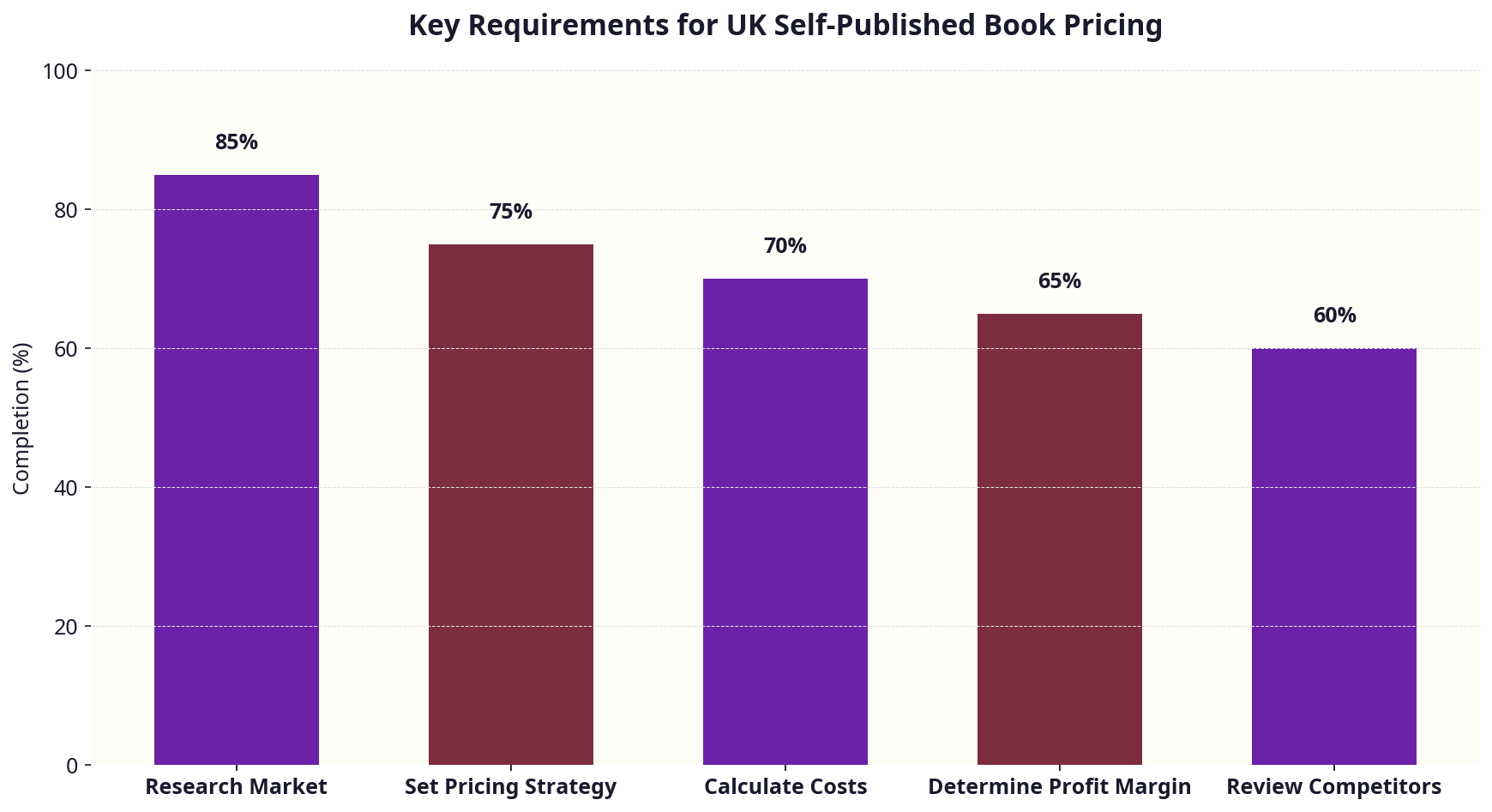
1. Calculate Your Base Costs
Start by listing every cost item:
- ISBN purchase from Nielsen (£93 single or £174 for 10)
- Professional formatting service (e.g., publishing.co.uk pricing typically £80-£150 depending on complexity)
- Cover design (£300-£600 for UK professional designers)
- Editing and proofreading (variable)
- Print cost per unit from your POD provider (Amazon KDP, IngramSpark, etc.)
Add these to get your minimum break-even price.
A personal note: When I first priced Google. Panic. Repeat., I underestimated the impact of the £93 ISBN and the cover design fees. It forced me to re-evaluate my pricing to avoid selling at a loss.
2. Research Genre Pricing Benchmarks
Look at top-selling books in your genre on Amazon UK and other retailers. Note their price points for:
- Kindle ebooks
- Paperback print books
- Hardbacks (if applicable)
Don’t guess—use actual data.
How to do this practically:
- Go to Amazon.co.uk.
- Search your genre or similar titles.
- Use filters to narrow down to the top 20 best sellers.
- Note prices across formats and observe any patterns.
3. Decide on Your Pricing Strategy
Three common strategies:
- Penetration pricing: Low price to gain market share quickly, often used for series starters or new authors.
- Premium pricing: Higher price reflecting expert authority or high production value, common in business or academic books.
- Competitive pricing: Match or slightly undercut comparable titles.
4. Adjust for Format and Distribution
Remember, ebook pricing can be more flexible, but print books have fixed printing costs that limit how low you can go. Also factor in distribution fees—Amazon takes 60% on print sales under expanded distribution.
5. Consider VAT and Tax Implications
In the UK, print books are zero-rated for VAT, but ebooks attract 20% VAT. This impacts your pricing and profit margin.
Example:
If you price an ebook at £2.99, VAT of 20% means the retailer collects £0.50 VAT, reducing the amount they pay to you and influencing how much you actually earn.
6. Test and Iterate
Don’t be afraid to experiment. Amazon’s KDP lets you change prices frequently. Track sales volume, revenue, and reader feedback.
Practical tip: Use the KDP dashboard (Dashboard > Bookshelf > Pricing & Royalty) to adjust prices. Monitor the sales graph weekly for changes.
UK-Specific Considerations for Book Pricing
The UK market has unique characteristics that US-centric advice often misses:
Nielsen ISBNs and Their Impact
Unlike the US, where Bowker dominates, UK authors must buy ISBNs through Nielsen. A single ISBN costs £93, a block of 10 costs £174. Many authors opt for free KDP ISBNs, but that means Amazon is listed as the publisher, not you—bad for brand control and wider distribution.
Why it matters:
Using your own ISBN allows you to distribute through multiple channels—Waterstones, independent bookstores, libraries—and maintain your author brand across platforms.
VAT Rules
- Print books sold in the UK are zero-rated for VAT.
- Ebooks are standard-rated at 20%, impacting pricing decisions especially on platforms like Amazon and Apple Books.
- If you price your ebook too low, VAT can make the effective cost unsustainable.
Insight: VAT on ebooks is a relatively recent UK policy change that surprises many authors. You can’t simply apply US pricing logic here.
Print-on-Demand Providers and Costs
UK authors often use Amazon KDP UK or IngramSpark UK. Printing costs depend on trim sizes standard in the UK market (e.g., 198 x 129 mm for trade paperback). Higher page counts and colour interiors increase costs substantially.
UK standard trim sizes include:
- 198 x 129 mm (UK Trade Paperback)
- 210 x 148 mm (A5)
- 216 x 138 mm (Royal Octavo)
Selecting the right size affects printing costs and reader expectations.
Distribution Channels
Amazon UK dominates but consider:
- Waterstones and independent bookshops (usually require trade discounts and wholesale arrangements).
- Kobo and Apple Books for wider ebook reach.
Note: Getting into Waterstones requires a wholesale discount of around 40-55% off your retail price, plus your own ISBN and professional print quality.
Market Size and Pricing Expectations
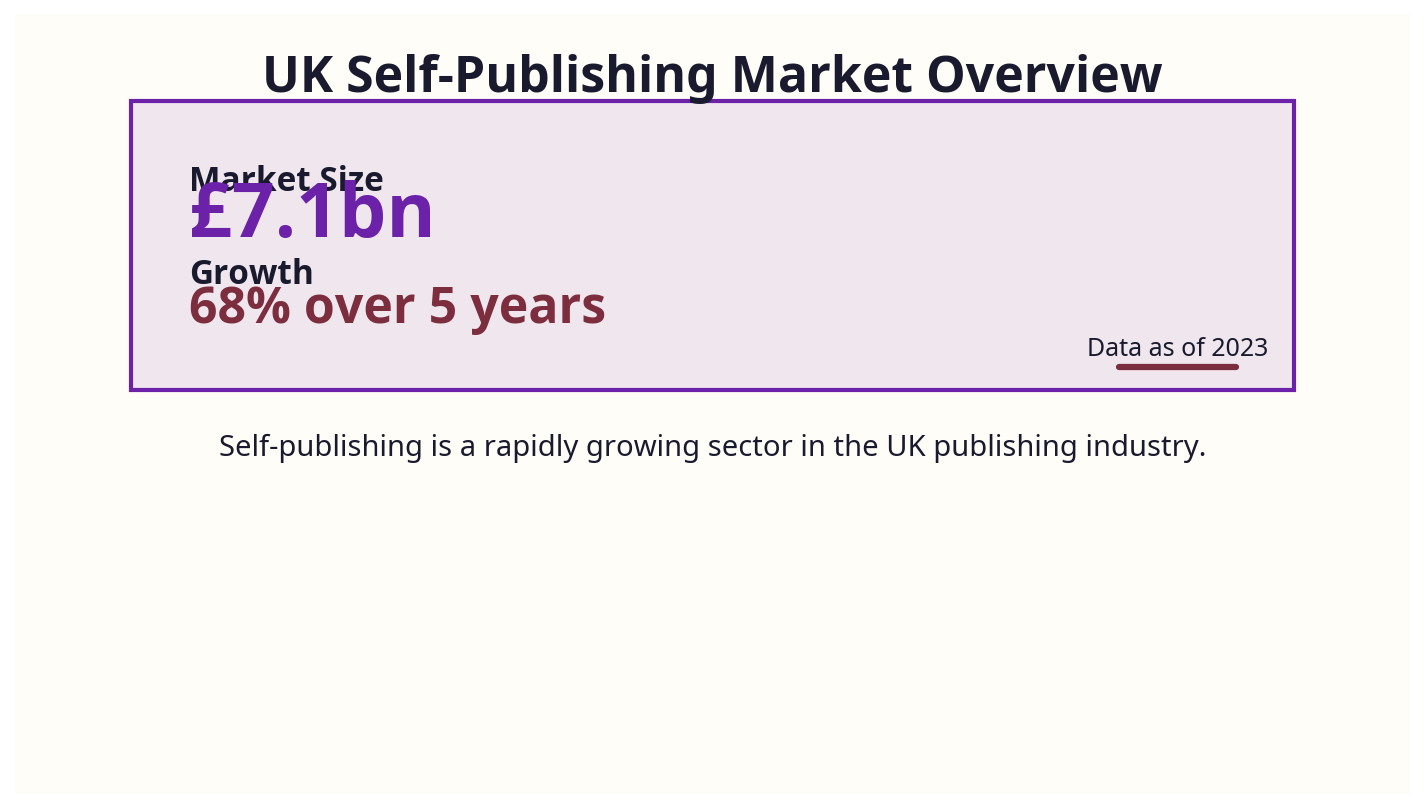
The UK book market generated £7.1 billion in 2023, with self-publishing growing 68% over the last five years. However, UK readers expect certain price points, and deviating too far can hurt sales.
Example: Self-published ebooks priced above £6 often see steep drops in sales volume unless backed by significant marketing.
Common Mistakes and How to Avoid Them
Pricing a self-published book is riddled with pitfalls. Here are the most frequent errors I’ve seen—and experienced myself.
Mistake #1: Underpricing to Compete
I once hired a formatter for £130 who delivered shoddy work, then tried Fiverr gigs for cheap formatting, hoping to save costs and price my book low accordingly. The result? Poor quality damaged my brand and sales. Underpricing to “compete” often backfires, especially if your book looks amateurish.
Mistake #2: Ignoring UK-Specific Costs
Many authors forget Nielsen ISBN costs or VAT implications. For example, a £2.99 ebook effectively nets less after 20% VAT and Amazon’s cut. Pricing without this knowledge can lead to losses.
Mistake #3: Using Free KDP ISBNs Without Considering Branding
Free ISBNs list Amazon as publisher, limiting your options for physical distribution and control. This can hurt long-term author credibility.
Mistake #4: Neglecting Format Differences
Print books have printing minimums and distribution fees that often require higher prices than ebooks. Mixing strategies can confuse buyers.
Mistake #5: Overcomplicating Pricing Models
Some authors obsess over elaborate dynamic pricing algorithms without tracking results. Pricing should be tested but kept simple enough to manage.
Mistake #6: Not Accounting for Marketing Costs
Pricing your book as if marketing is free is a recipe for disappointment. Marketing costs should be baked into your pricing strategy or budget.
Tools and Resources for Self-Published Book Pricing
Several tools help you set and test prices effectively:
Amazon KDP Pricing Calculator
Available in your KDP dashboard under Bookshelf > Pricing & Royalty, it estimates royalties based on price, distribution, and royalty rates. It also warns if your price falls outside royalty thresholds.
IngramSpark Print Cost Calculator
Visit IngramSpark’s Print Calculator to estimate print costs based on trim size, page count, colour or black & white interiors, and print location.
Nielsen ISBN Agency (UK)
Official site for ISBN purchase and management: nielsenisbnstore.com
Publishing.co.uk Formatting Service
Professional formatting ensures your book meets marketplace requirements, which is crucial for pricing optimally. Poor formatting can lead to rejected files or bad reader experience, hurting sales.
Before building publishing.co.uk, I hired a so-called ’expert’ formatter for £130. The result was terrible. I tried Fiverr next, which was just as bad. The automated tools available at the time were awful. It was a headache before I even started marketing the book. That experience is exactly why I built publishing.co.uk—to save authors from the same frustrations.
Competitor Price Tracking Tools
Services like BookBub’s competitor analysis, Google Alerts for new releases in your genre, or even manual Amazon UK searches give insight into genre pricing trends.
VAT and Tax Guidance
The UK government’s VAT Notice 701/2 provides detailed information on VAT for books and ebooks.
Cost Breakdown: Real UK Pricing in GBP
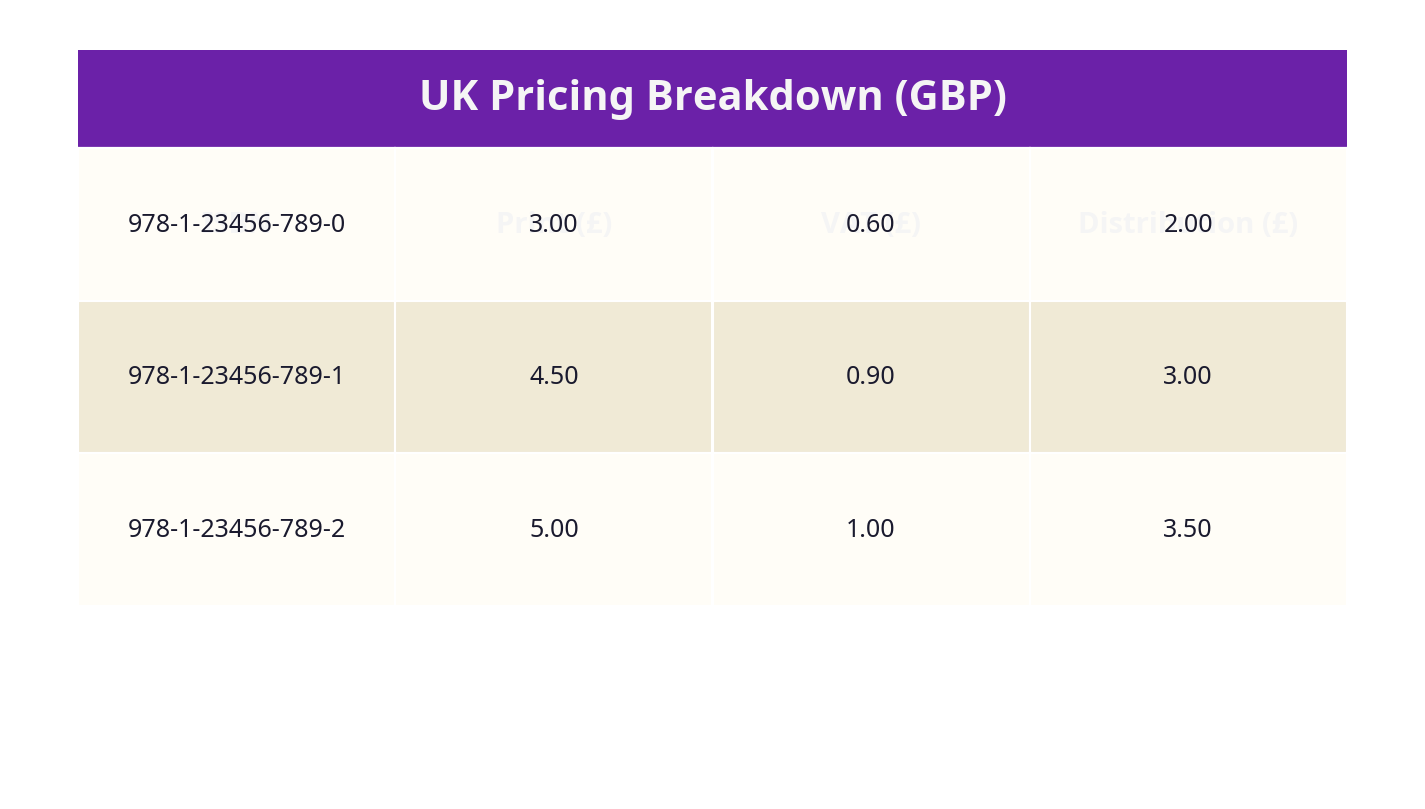
To make pricing concrete, here’s a typical cost breakdown for a 300-page paperback and ebook in the UK.
| Item | Cost (GBP) | Notes |
|---|---|---|
| Nielsen ISBN (single) | £93 | Required for print and wide distribution |
| Professional Formatting | £80 - £150 | Varies by complexity |
| Cover Design | £300 - £600 | UK professional rates |
| Proofreading/Editing | £500 - £1,500 | Variable; essential |
| Print Cost (POD, 300 pages) | £3.50 - £5.00 per unit | Influenced by trim size, paper, B&W/Colour |
| Amazon Royalty (print) | ~40% of list price | After printing costs |
| Amazon Royalty (ebook) | 35%-70% | Depending on price tier |
| VAT on ebook | 20% | Adds complexity to pricing |
| Marketing Budget | £100 - £1,000+ | Optional but recommended |
Example Calculation
- Paperback list price: £9.99
- Print cost: £4.00
- Amazon royalty (60% cut): £3.00
- Net per sale: approx £2.99 (before VAT is considered for print = zero-rated)
For ebooks, pricing at £2.99 with 70% royalty (and VAT considered) yields roughly £1.80 net per sale.
Real-World Case Studies and Pricing Examples
Case Study 1: Business Non-Fiction Author in London
Jane, a London-based business coach, self-published a 250-page business non-fiction paperback and ebook. She purchased 10 ISBNs from Nielsen for £174, invested £400 in cover design, £120 in formatting, and £800 in editing. She priced the paperback at £14.99 and the ebook at £6.99.
Outcomes:
- Paperback print cost: £3.80 per unit via IngramSpark UK.
- Distribution discounts to Waterstones and independents reduced her net to about £7.50 per book after trade discounts and printing.
- Ebook sales were slower due to higher VAT, but the premium pricing reinforced her expert positioning.
Jane’s advice: “Invest in your ISBNs and professional design early. It helped me get into physical bookstores and build credibility.”
Case Study 2: Romance Author in Manchester
Tom self-published a romance novel series. He used a free KDP ISBN to reduce upfront costs, priced ebooks aggressively at £2.99, and paperbacks at £6.99.
Outcomes:
- Strong ebook sales initially but limited physical distribution due to ISBN branding.
- Print sales were minimal because the £6.99 price was close to break-even after printing and Amazon cuts.
- Tom later invested in Nielsen ISBNs for subsequent series entries to expand retail options.
Tom’s takeaway: “Free ISBNs are tempting but can box you in. If you want to grow, buy your own.”
Case Study 3: Academic Textbook Author in Edinburgh
Dr Singh published an academic textbook aimed at university students. The book is 400 pages, colour interior, priced at £45 paperback and £35 ebook.
Outcomes:
- High production costs: £1,200 editing, £600 formatting, £800 cover design, plus £93 ISBN.
- Print cost per unit around £8 due to colour printing.
- Despite high pricing, sales were steady through university bookstore orders, thanks to institutional demand.
Dr Singh’s insight: “Academic pricing works differently. Your niche dictates your price more than market averages.”
Expert Tips from 25 Years in eCommerce and Publishing
Drawing from my time running eCommerce brands and launching my own books, here’s what I’ve learned about pricing self-published books:
Think Like a Business, Not Just an Author
Your book is a product. Don’t fall into the trap of emotional pricing or underestimating the value you provide. Calculate costs, set margins, and track performance like any business.
Don’t Skimp on Professional Formatting
When I was getting Google. Panic. Repeat. ready for KDP, the formatting was a nightmare. I wasted hours fixing issues caused by cheap freelancers and bad tools. Using a trusted service like publishing.co.uk saves you headaches and ensures your pricing strategy isn’t undermined by poor presentation.
Factor in Marketplaces and Distribution
Amazon UK is huge, but don’t ignore other platforms or potential physical sales. Your pricing needs to work across channels.
Use Data to Adjust Your Price
Track sales velocity and revenue. If your price is too high, sales will stall; too low, and revenue suffers. Adjust with small increments and monitor.
Beware of Free ISBNs and Branding Loss
Invest in your ISBNs to maintain control and professionalism. This pays off in the long run.
Pricing is an Ongoing Process
Your first price isn’t final. Seasonality, promotions, and new releases may require changes.
Practical Step-by-Step on KDP Pricing Adjustment
- Log in to your KDP dashboard.
- Click Bookshelf.
- Select the book you want to price.
- Click Edit book details > Pricing & Royalty tab.
- Enter your desired price in GBP (£).
- Review royalty estimates and VAT implications shown below.
- Click Save and Publish.
Changes typically take 24-72 hours to reflect on Amazon UK.
Frequently Asked Questions
What is the most common mistake UK authors make with self published book pricing?
Many UK authors underestimate the impact of Nielsen ISBN costs and VAT on ebooks. This leads to setting prices too low to cover expenses or relying on free KDP ISBNs, which harms author branding and distribution options.
How much does self published book pricing cost in the UK?
Costs vary widely but expect to pay at least £500-£1,000 upfront for professional formatting, cover design, editing, and ISBNs. Print costs depend on page count and format, typically £3.50-£5.00 per paperback unit printed. Ebook fees are minimal but VAT and platform cuts apply.
What tools do UK authors recommend for self published book pricing?
Amazon KDP’s pricing calculator and IngramSpark’s print cost estimator are essential. For UK-specific ISBN management, Nielsen’s official site is the authority. Additionally, professional formatting services like publishing.co.uk help ensure pricing strategies are not sabotaged by technical errors.
How long does the self published book pricing process typically take?
From initial cost calculation to final price setting, it can take anywhere from a few days to several weeks, depending on how much market research you do and whether you test pricing dynamically on platforms like Amazon KDP.
Can I handle self published book pricing myself or should I hire a professional?
You can handle it yourself with diligence and research, especially if you’re comfortable with numbers and market analysis. However, many authors benefit from consulting professionals for formatting and pricing strategies to avoid costly mistakes and speed up the process.
What are the UK-specific requirements for self published book pricing?
Key UK requirements include purchasing ISBNs from Nielsen, understanding print VAT exemptions (zero-rated for print, 20% for ebooks), and using UK-standard trim sizes for print books. Also, consider UK distribution channels and market pricing norms.
Should I use Amazon’s free ISBN or buy my own from Nielsen?
If you want full control over your book’s publishing rights and wider distribution (including physical bookstores), you should buy your own Nielsen ISBNs. Free KDP ISBNs are fine for exclusive Amazon ebook sales but limit your options and brand presence.
How does VAT affect my ebook pricing strategy?
VAT at 20% on ebooks means your effective revenue per sale is lower than the list price minus Amazon’s cut. You need to factor this in when setting prices, often leading UK authors to price ebooks slightly higher than their US counterparts to maintain margins.
About the Author
Robert Prime is a best-selling self-published author, veteran eCommerce strategist, and the founder of publishing.co.uk. With over 25 years of experience in digital business and 15 successful exits, he brings a battle-tested perspective to the publishing industry. After experiencing firsthand the archaic, headache-inducing process of formatting a KDP-compliant book for his own best-seller, Google. Panic. Repeat., Robert built publishing.co.uk to solve the problem for other authors. He is also a co-owner of the LoveReading.co.uk network (the UK’s largest book review platform), founder of the Amazon growth agency MrPrime.com, and a member of the Forbes Business Council.