Understanding Book Trim Sizes: Which One Should You Choose?
By Robert Prime
Last reviewed by Robert Prime — March 2026
Book trim sizes are one of those dull technical details that most authors either ignore or screw up royally. Yet, this seemingly minor choice can wreck your entire publishing project—from printing costs and reader comfort to how your book looks on Amazon UK and whether it even gets stocked in UK bookshops.
I’ve been in the publishing trenches for 25 years, working across eCommerce, book formatting, and print production. I’ve seen authors waste weeks fiddling with margins or picking bizarre trim sizes that kill their chances of retail success. When I formatted Google. Panic. Repeat.—my own book about health anxiety—I learned the hard way that trim size is not just a number; it’s a strategic decision that can save or cost you serious cash and credibility.
This guide is the most no-BS, UK-focused resource you’ll find on book trim sizes. I’ll walk you through the essentials, break down UK-specific quirks, expose common screw-ups, and share tips that only come from decades of hard knocks. If you want to avoid the usual pitfalls and get your book right the first time, read on.
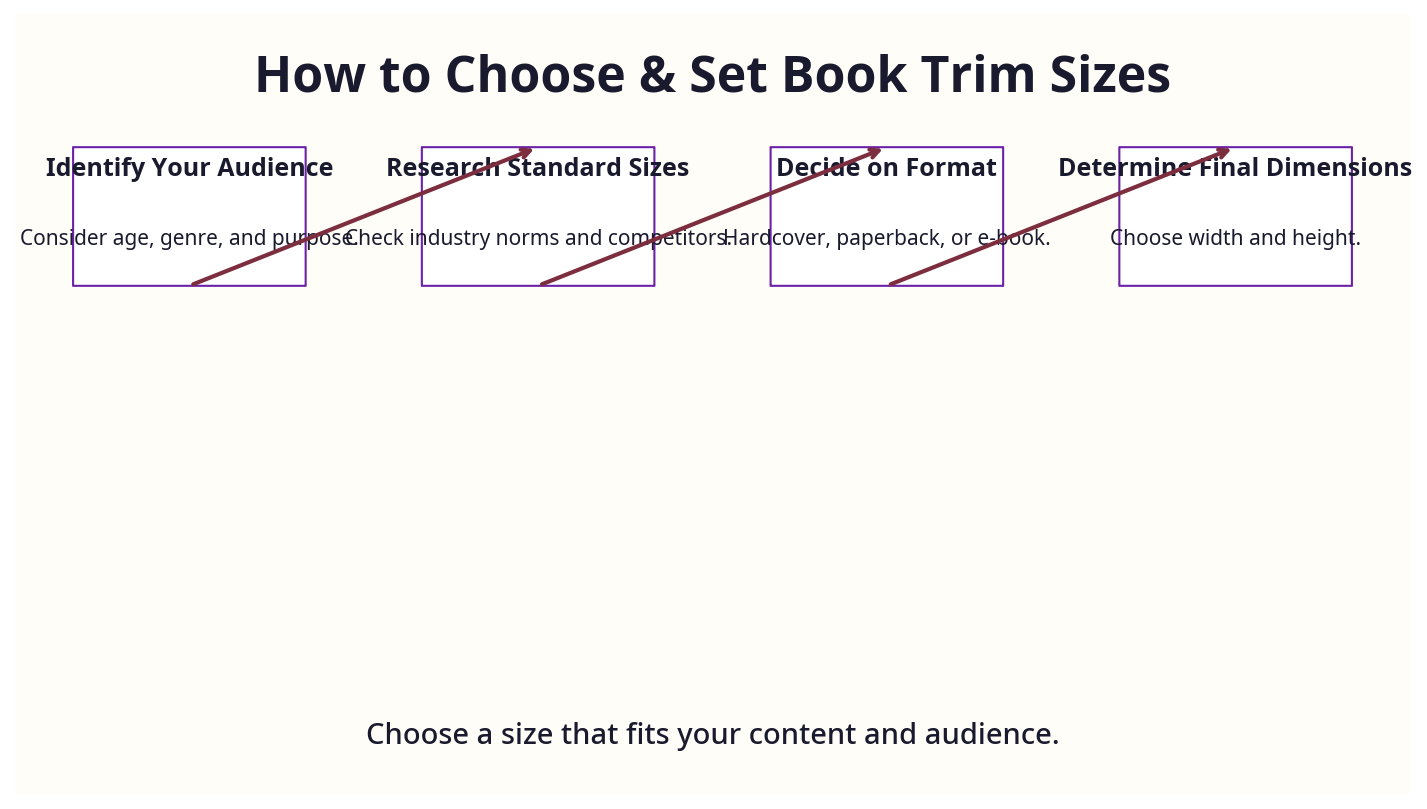
Table of Contents
- What You Need to Know Before Starting
- Step-by-Step Guide to Choosing and Applying Book Trim Sizes
- UK-Specific Considerations for Book Trim Sizes
- Common Mistakes and How to Avoid Them
- Tools and Resources for UK Authors
- Cost Breakdown: What UK Authors Should Expect
- Real-World Case Studies and Examples
- Expert Tips from 25 Years in the Industry
- Frequently Asked Questions
What You Need to Know Before Starting
What Are Book Trim Sizes?
The trim size is the final physical dimension of your book after printing and cutting. It’s the width and height of the page block—the actual size your reader holds in their hands. This is not the size of your manuscript file or the PDF before trimming; it’s the finished book size.
UK printers generally use millimetres or centimetres, but many POD platforms like Amazon KDP default to inches because they’re US-based. This mismatch trips up a lot of authors who don’t convert properly.
Why Trim Size Actually Matters (More Than You Think)
Trim size impacts:
- Printing costs: Larger books eat more paper and cost more to print. If you pick a size just because it looks cool, you’re throwing money away.
- Reader experience: Too small, and your book feels like a pamphlet. Too big, and it’s a pain to hold. Both kill reading comfort.
- Genre expectations: Romance readers expect one size, business books another. Ignore this, and your book looks amateurish or out of place.
- Distribution: UK wholesalers and bookshops have strict size preferences. Pick a weird size, and they’ll reject your book outright.
- File formatting: Your manuscript layout—margins, fonts, line spacing—depends on trim size. Get it wrong, and your text looks cramped or sparse.
Terms You Need to Stop Ignoring
- Bleed: Extra image area beyond the trim edge that gets cut off. Essential for full-page images that go to the edge.
- Gutter: The inner margin near the spine. If your book is thick, this needs to be wider or your text disappears into the fold.
- Spine width: Depends on page count and paper thickness. If you don’t calculate this correctly, your spine text will be misaligned or squashed.
- Trim box: The exact dimensions your printer will cut to.
- Live area: The safe zone inside margins where all important text and images must stay.
Step-by-Step Guide to Choosing and Applying Book Trim Sizes
Step 1: Research Standard Trim Sizes in Your Genre and Market
Don’t just pick a random size because it looks “cool” or “different.” Look at what’s standard in your genre and UK market.
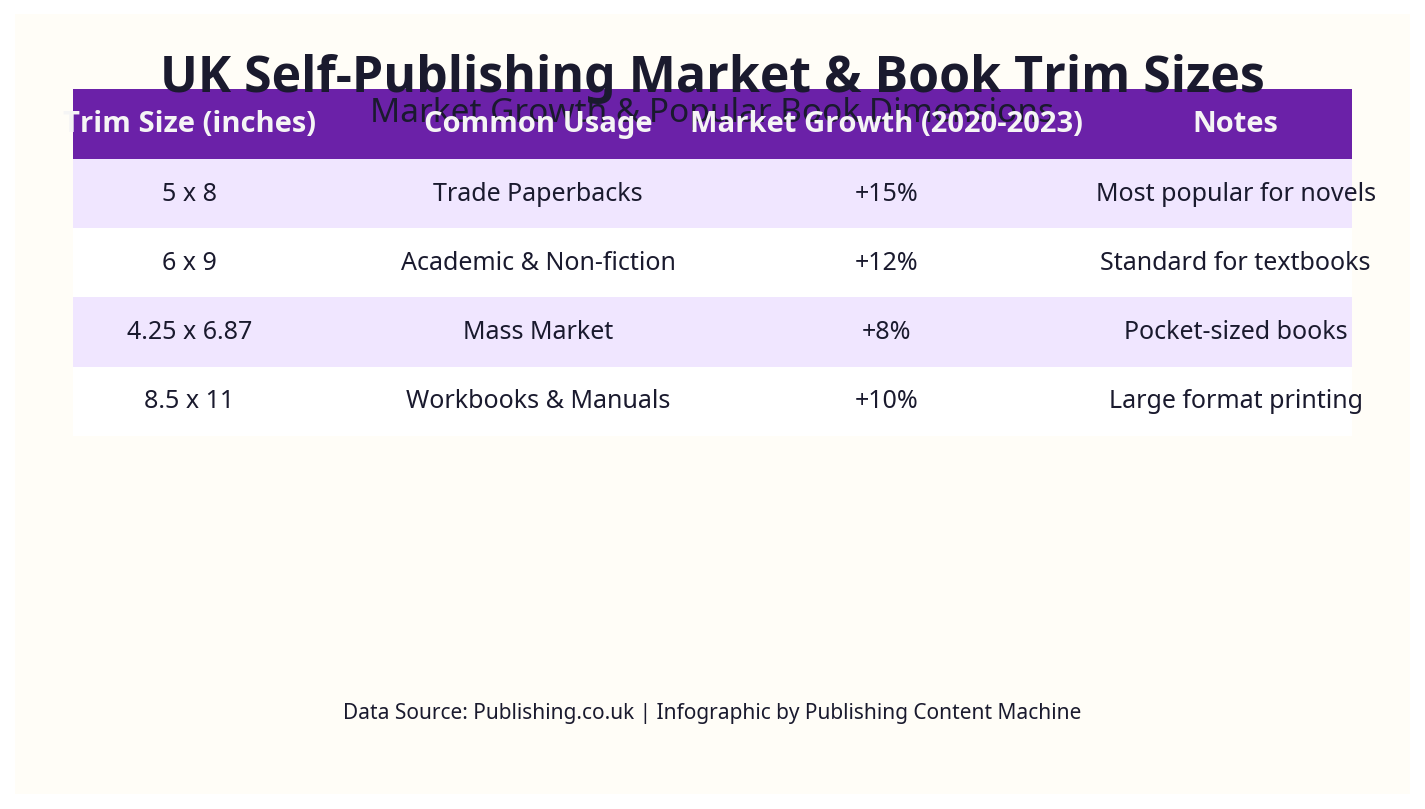
Popular UK trim sizes by genre:
| Genre | Typical Trim Size (inches) | Metric Equivalent (mm) |
|---|---|---|
| Fiction (Trade) | 5” x 8” or 5.06” x 7.81” | 127 x 203 mm or 129 x 198 mm |
| Non-fiction | 6” x 9” | 152 x 229 mm |
| Children’s | 8” x 10” or 8.5” x 11” | 203 x 254 mm or 216 x 279 mm |
| Poetry | 5” x 8” | 127 x 203 mm |
Amazon KDP’s trim sizes are mostly US-centric but widely used globally. However, if you want your book stocked in UK shops or libraries, stick to UK trade sizes. Wholesalers like Gardners or Nielsen BookNet often reject non-standard sizes.

Step 2: Consider Your Book Length and Page Count
The longer your book, the more you need to think about gutter size and possibly larger trim sizes. A 300+ page novel squeezed into 5” x 8” looks cramped and is a pain to hold open.
Rule of thumb: For UK paperbacks over 350 pages, move up to 6” x 9” or the UK trade size 129 x 198 mm. It’s worth the slightly higher print cost.
Step 3: Decide on Your Printing Method
Are you going POD or offset? POD platforms like Amazon KDP or IngramSpark have fixed trim sizes and specs. Offset printing lets you custom-size but expect minimum orders of 250+ copies and higher costs.
UK note: Local printers like CPI Group or Clays do short runs but at a price. POD is your friend if you want under 100 copies.
Step 4: Set Up Your Manuscript According to Trim Size
This is where most authors screw up. Don’t just slap your manuscript into a default page size.
Microsoft Word:
Go to Layout > Size > More Paper Sizes and enter your trim size.
Then set margins under Layout > Margins > Custom Margins, adding a wider gutter for thick books (12-15mm gutter for 300+ pages).
Set orientation to Portrait.Adobe InDesign:
Create a new document with your trim size.
Set margins and gutter carefully.
Add 3mm bleed if you have images or colour to the edge.
Use facing pages for spreads.Scrivener:
Great for organising text, but export to Word or InDesign for final layout.
Step 5: Format Interior Elements to Suit Your Trim Size
Don’t just copy-paste fonts and spacing from other books. Tailor them to your trim size.
- Fiction: 11-12pt serif fonts (Garamond, Georgia, Caslon) with first-line indents, no extra paragraph spacing.
- Non-fiction: Block paragraphs with spacing, font size 10-12pt depending on audience.
- Poetry: Smaller trim sizes, centred text, lots of white space.
Step 6: Export Print-Ready Files Correctly
Export to PDF/X-1a or PDF/X-3 with embedded fonts. This is what printers want.
In InDesign:
File > Export > Adobe PDF (Print) > PDF/X-1a:2001 preset.
Step 7: Order Physical Proof Copies and Inspect Them
Digital previews lie. They don’t show you how the book feels in hand, if the margins are tight, or if the spine text is off.
Order proofs from your POD or printer. Expect to pay £5-£15 per copy in the UK. It’s a necessary evil.

UK-Specific Considerations for Book Trim Sizes
Nielsen ISBN Pricing and Format Implications
In the UK, Nielsen Book Services is the only ISBN provider, and they charge a bloody fortune compared to the US:
- Single ISBN: £93 (2024 prices)
- Block of 10 ISBNs: £174
Every format (paperback, hardcover, eBook) needs its own ISBN. So if you mess up your trim size and need a new edition or format, you’re shelling out again.
I’ve been burned by this. Bought a second ISBN for a revised paperback after a trim size screw-up. £93 down the drain.
Print Costs and VAT Quirks
Physical books sold in the UK are zero-rated for VAT—no VAT on sales. But print costs vary wildly with trim size and page count.
Example Amazon KDP UK print costs:
| Trim Size | Page Count | Cost per Copy (GBP) |
|---|---|---|
| 5” x 8” | 200 | £2.30 |
| 6” x 9” | 300 | £3.50 |
| 8” x 10” | 50 (children’s) | £2.80 |
Bigger trim sizes and more pages = more paper = less profit per book.
UK Market Preferences and Distribution Realities
UK wholesalers and retailers want standard sizes:
- Trade paperback fiction: 129 x 198 mm (5.06” x 7.81”)
- Non-fiction business: 152 x 229 mm (6” x 9”)
Go off these, and your book risks rejection by Gardners, Bertrams, or Nielsen BookNet. That means no bookshops, no libraries, no sales.
Print-On-Demand Options in the UK
- Amazon KDP UK: Fast, cheap, US-centric sizes dominate.
- IngramSpark UK: Better UK size options, wider distribution.
- Local UK Printers: CPI Group, Clays, etc. offer custom sizes but expect minimum runs and higher costs.

Common Mistakes and How to Avoid Them
Mistake 1: Picking Weird, Non-Standard Sizes to “Stand Out”
Newsflash: Standing out with a weird trim size just makes your book harder to sell and more expensive to print. Retailers hate it, and so do readers.
Stick to UK trade sizes or you’ll pay for it in distribution headaches and lost sales.
Mistake 2: Forgetting the Gutter Margin
If your gutter is too narrow, text disappears into the spine. This is a rookie mistake I see all the time.
For books over 250 pages, add at least 12mm extra gutter margin. Don’t be lazy here.
Mistake 3: Poor File Setup and Formatting
I once paid a formatter £130 who delivered a file with the wrong trim size. I had to redo the entire layout myself. Don’t trust amateurs who don’t know UK specs.
Mistake 4: Skipping Physical Proof Copies
Digital previews are a joke. They don’t show you how the book feels or if your margins are tight.
Order proofs. Twice. It’s annoying but essential.
Mistake 5: Ignoring Spine Width in Cover Design
Spine width changes with page count and paper thickness. If your cover designer ignores this, your spine text will be misaligned or squashed.
Calculate spine width early and double-check with your printer.

Tools and Resources for UK Authors
Formatting Software
- Microsoft Word: Basic but requires manual setup for trim sizes and gutters.
- Adobe InDesign: Industry standard for professional print layout.
- Vellum: Mac-only, great for eBooks and print but US sizes dominate.
- Scrivener: Excellent for manuscript organisation; export to Word/InDesign for final formatting.
- publishing.co.uk: Our UK-focused automated formatting tool that nails trim sizes, gutters, and KDP specs without the usual headaches.
ISBN and Barcode Providers
- Nielsen UK: Sole ISBN provider in the UK. Expensive but mandatory.
- GS1 UK: For EAN-13 barcodes needed by retailers.
Print-On-Demand Platforms
- Amazon KDP: Quick, easy POD with US-centric sizes.
- IngramSpark UK: More UK-friendly sizes and wider distribution.
- Local UK Printers: CPI Group, Clays, etc. for short runs and custom sizes.
Cost Breakdown: What UK Authors Should Expect
| Expense Category | Approximate Cost (GBP) | Notes |
|---|---|---|
| ISBN (Single) | £93 | Required per format |
| ISBN (Block of 10) | £174 | Cheaper per unit if multiple books |
| Professional Cover Design | £300 - £600 | UK market rate for quality design |
| Formatting (Freelancer) | £100 - £300+ | Variable quality, beware cheap gigs |
| Printing (POD per copy) | £2 - £5+ depending on size/page | Larger trim sizes and pages cost more |
| Proof Copies | £5 - £15 | Ordering physical proof is essential |
Example: A 6” x 9” paperback of 300 pages costs around £3.50 to print on KDP UK. With a retail price of £6.99 and Amazon’s cut (~£2.50), you’re left with about £1 profit per book. Increase trim size or page count, and that margin shrinks fast.
Real-World Case Studies and Examples
Case Study 1: Google. Panic. Repeat. — Trim Size Lessons
I initially picked 5” x 8” to keep my book compact and cheap. But at 280 pages, the gutter was too narrow, and readers complained the book was hard to hold open. Print proofs confirmed text was too close to the spine.
Switching to 5.06” x 7.81” (129 x 198 mm), the UK trade paperback standard, with wider gutters and margins, made the book feel professional and easier to read. Print cost went up 15p per copy, but it was worth it.
Case Study 2: UK Non-Fiction Business Book
A client wanted a 5” x 8” size to save money. I pushed for 6” x 9” to meet market expectations. The print cost rose by 40p per copy, but the book looked authoritative and fit UK shelves better. Wider trim size allowed better layout of charts and tables, improving reader comprehension and sales.
Case Study 3: Children’s Book with Custom Size
A UK author chose 7” x 9” for a children’s picture book to cut costs. Local printers recommended 8.5” x 11” for better image impact. The larger size increased print costs by 30%, but schools and libraries preferred the professional look, boosting sales.
Expert Tips from 25 Years in the Industry
Trim Size Is a Marketing Decision, Not Just a Technical One
Having worked with UK retailers through LoveReading.co.uk and advised publishers via my Amazon growth agency MrPrime.com, I can say trim size signals your book’s positioning. A business book at 5” x 8” looks cheap and casual; a thriller at 6” x 9” might seem oversized.
Use the Right Trim Size to Optimise Amazon UK Sales
Amazon’s algorithms favour books that meet customer expectations. Standard UK trim sizes reduce returns and negative reviews from readers put off by awkward sizes.
Automate Formatting Where Possible
Manual formatting is a time sink and a headache. Before launching publishing.co.uk, I wasted money on poor freelancers and Fiverr gigs. Automated UK-focused services save time and stress.
Always Order Proofs — Twice
POD previews lie. Order at least two rounds of physical proofs to catch and fix issues.
Plan Spine Width Early
Spine width depends on page count and paper type. Calculate it before commissioning cover design. Use Amazon’s spine width calculator but verify with your UK printer.
Frequently Asked Questions
How do I calculate spine width for my UK paperback book?
Spine width is calculated by multiplying the page count by the paper thickness (usually 0.05mm for standard white paper). For example, a 300-page book with 0.05mm paper thickness has a spine width of 15mm (300 x 0.05mm). Add this measurement to your cover width when designing. Always confirm with your printer’s specifications, as paper types vary.
What trim sizes are most likely to be rejected by UK wholesalers?
Non-standard sizes that deviate from UK trade paperback norms (e.g., anything other than around 129 x 198 mm for fiction or 152 x 229 mm for non-fiction) are often rejected by wholesalers like Gardners and Nielsen BookNet. Oversized or unusually shaped books also face rejection, limiting distribution.
Can I use different trim sizes for print and eBook formats?
Yes. eBooks don’t have fixed trim sizes since they reflow on devices. However, your print book trim size must be fixed and consistent. Each print format requires its own ISBN if the trim sizes differ.
What are the common reasons Print-on-Demand services reject trim size files?
Common reasons include: incorrect page dimensions, missing or incorrect bleed settings, improper margin or gutter sizes, embedded fonts missing, and spine width mismatches. UK POD services like IngramSpark have strict specs; always check their guidelines and upload print-ready PDFs.
How can I troubleshoot my manuscript file if my POD trim size is rejected?
First, verify your page size matches the POD’s accepted trim sizes exactly. Check margins and gutter widths, ensure bleed is set correctly (usually 3mm), embed all fonts, and export to PDF/X-1a or PDF/X-3. Use professional layout software or trusted UK-focused tools like publishing.co.uk to avoid errors.
Conclusion
Book trim sizes are not a trivial afterthought. They affect your printing costs, reader experience, market positioning, and ultimately your book’s success in the UK. After 25 years in eCommerce and publishing, I’ve seen too many authors waste time and money on poor trim size choices.
My blunt advice: research UK market standards, use professional or automated UK-focused formatting tools, and never skip ordering physical proofs. At publishing.co.uk, we built a platform to take the pain out of UK book formatting—especially getting your trim size right the first time.