How to Write a Book Description That Sells
By Robert Prime
Last reviewed by Robert Prime — March 2026
Table of Contents
- Introduction: Why Your Book Description Matters
- What You Need to Know Before Starting
- Step-by-Step Guide to Writing Your Book Description
- UK-Specific Considerations for Book Description Writing
- Common Mistakes UK Authors Make and How to Avoid Them
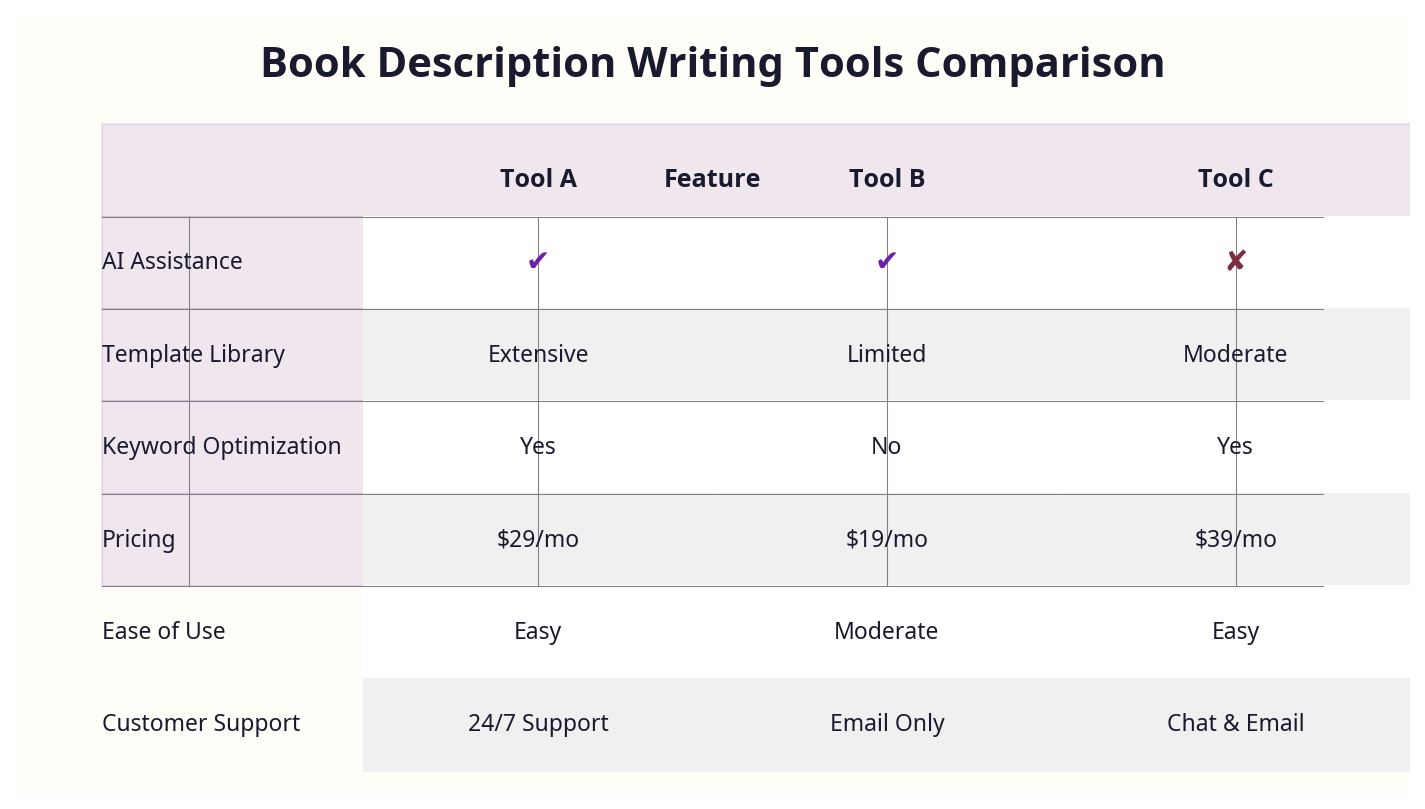
- Tools and Resources for Efficient Book Description Writing
- Cost Breakdown: What Writing Your Book Description Really Costs in the UK
- Comparison with Alternative Approaches
- Real-World UK Case Studies and Examples
- Expert Tips from 25 Years in the Industry
- Frequently Asked Questions
Introduction: Why Your Book Description Matters
If you think the hard part of publishing is writing the manuscript, think again. From my 25 years in eCommerce and publishing, I can tell you one brutal truth: the book description is your sales pitch. It’s the first real interaction a reader has with your book outside the cover image and title. And yet, it’s often neglected or badly done.
When I published Google. Panic. Repeat., I underestimated this completely. I spent months agonising over the manuscript but gave the book description a quick once-over. The result? My initial sales were sluggish despite glowing reviews. It was only after I rewrote the description with a sharper focus on benefits, keywords, and UK-specific phrasing that sales started to climb steadily.
Before building publishing.co.uk, I hired a so-called ’expert’ formatter for £130 who promised to help with metadata and description integration. The result was terrible, and the description was overlooked in the process. It was a costly lesson in how crucial this small piece of copy really is.
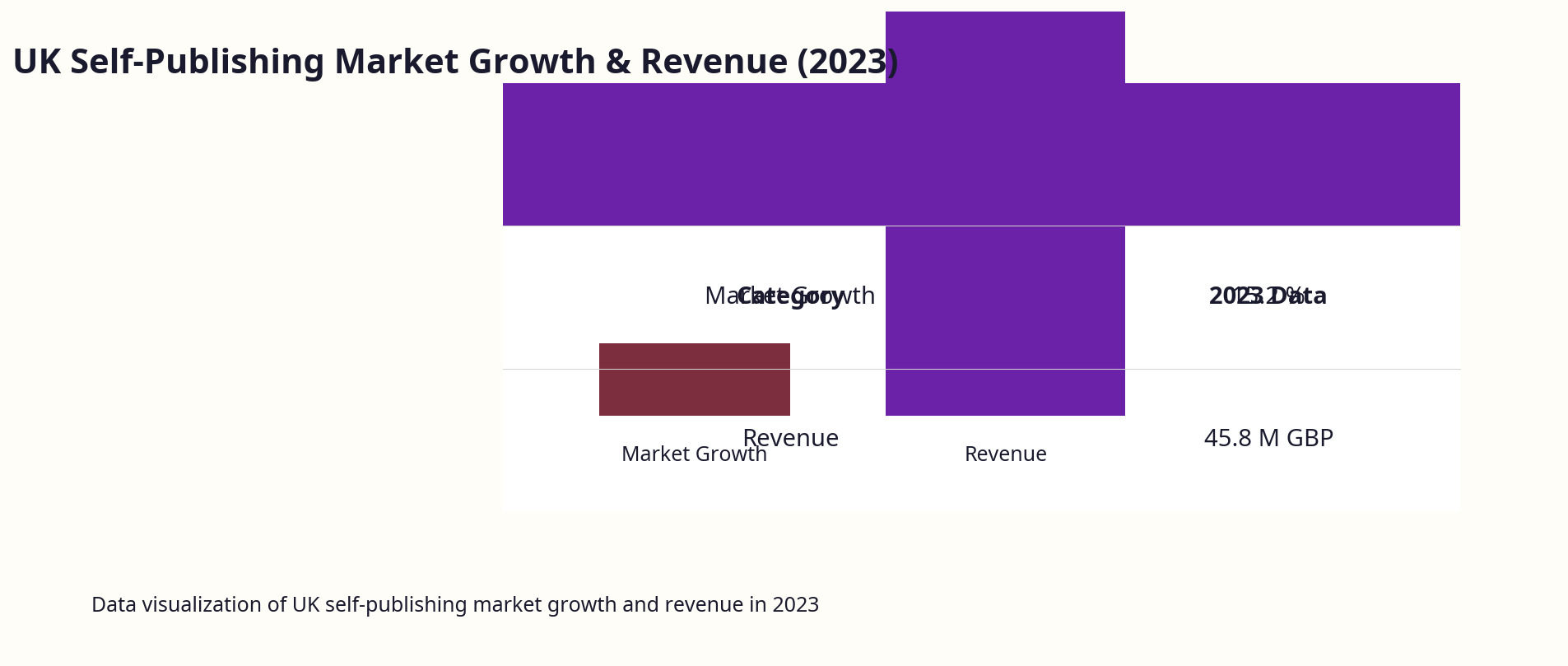
This experience isn’t unique. In the UK self-publishing market, which reached an astonishing £7.1 billion in revenue in 2023, the competition is fierce. Hundreds of thousands of books flood Amazon UK and other platforms every year. Your description is the frontline soldier in this battle for attention, converting browsers into buyers.
Many authors focus on editing, cover design, or pricing, but the description — a relatively small piece of real estate — wields disproportionate commercial power. This article will not only cover the basics and best practices but also give you a rare UK-focused, business-savvy perspective. Expect practical guidance, cost breakdowns in GBP, and real-world insights that go beyond generic advice.
What You Need to Know Before Starting
Writing your book description is not creative writing; it’s strategic copywriting. Here are some foundational points before you put pen to paper (or fingers to keyboard):
1. Understand Your Audience
Who is your ideal reader? What problems does your book solve for them? What emotions do you want to evoke? Your description must speak directly to this audience’s needs and desires.
For example, a UK-based historical fiction writer targeting readers fascinated by the Victorian era should use references that resonate locally, such as mentioning London landmarks or cultural events relevant to that period. Conversely, a business book aimed at UK entrepreneurs might highlight compliance with UK regulations or reference the UK tax year.
2. Know the Platform Rules and Display Constraints
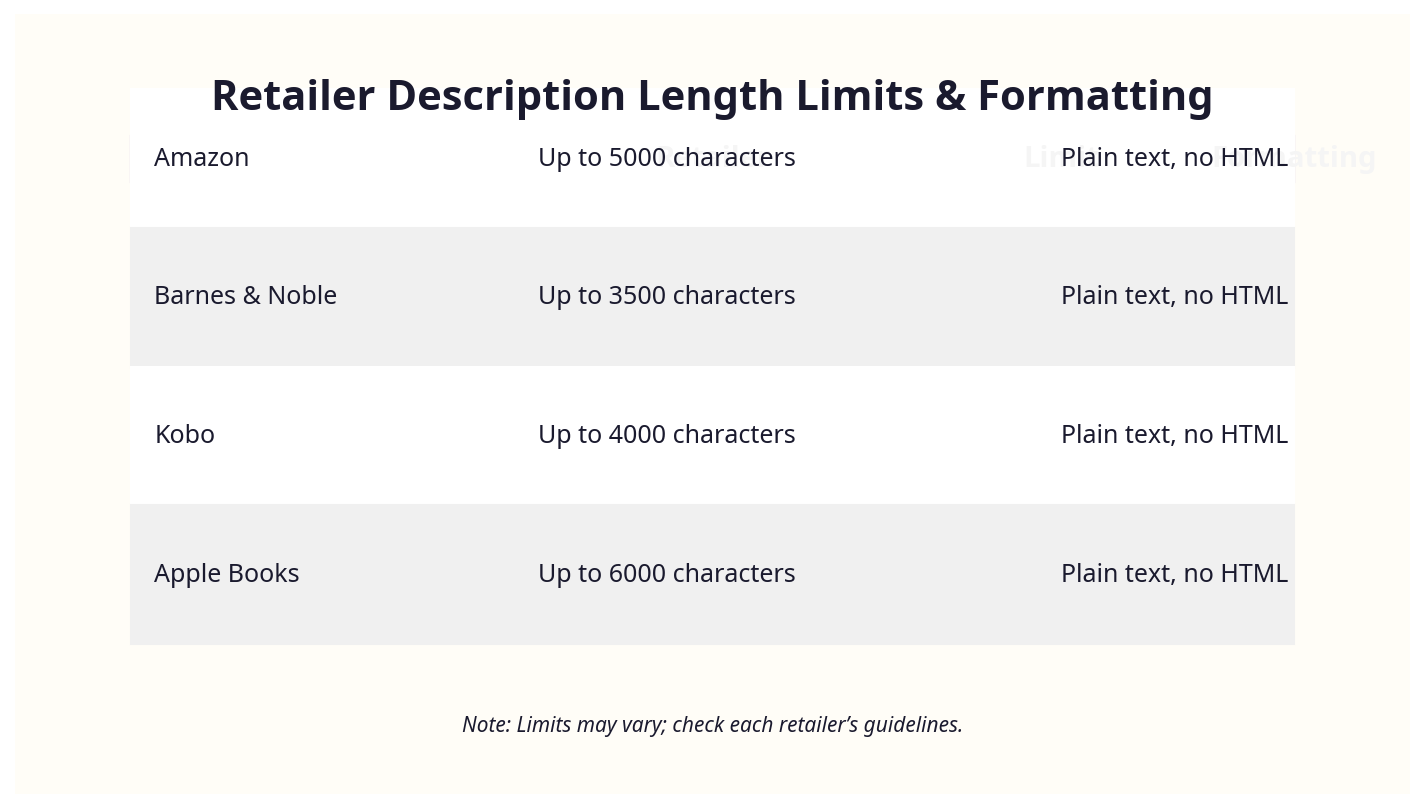
Different retailers have different maximum character counts and formatting allowances. Amazon KDP, for example, allows up to 4,000 characters but only shows the first 200-300 characters before truncating on mobile devices. Apple Books UK limits descriptions to 2,000 characters, and Waterstones prioritises editorial reviews over keyword optimisation.
Additionally, platforms like Kobo UK have their own guidelines and sometimes accept more complex HTML formatting than Amazon. Knowing these nuances helps tailor your description for each platform.
3. Balance Keywords and Readability
For discoverability, your description needs relevant keywords, but keyword stuffing kills conversion. Use natural language that flows but includes terms readers search for. For UK authors, this means researching common British English search terms and avoiding Americanisms that might confuse or alienate your audience.
4. Choose the Right Tone and Style
Match your genre and audience expectations. A thriller’s description is punchy and suspenseful; a business book’s is authoritative and solution-focused. If your book is a UK-based cosy mystery, a warm, inviting tone peppered with culturally specific humour will appeal more than a generic thriller-style description.
5. Formatting Matters
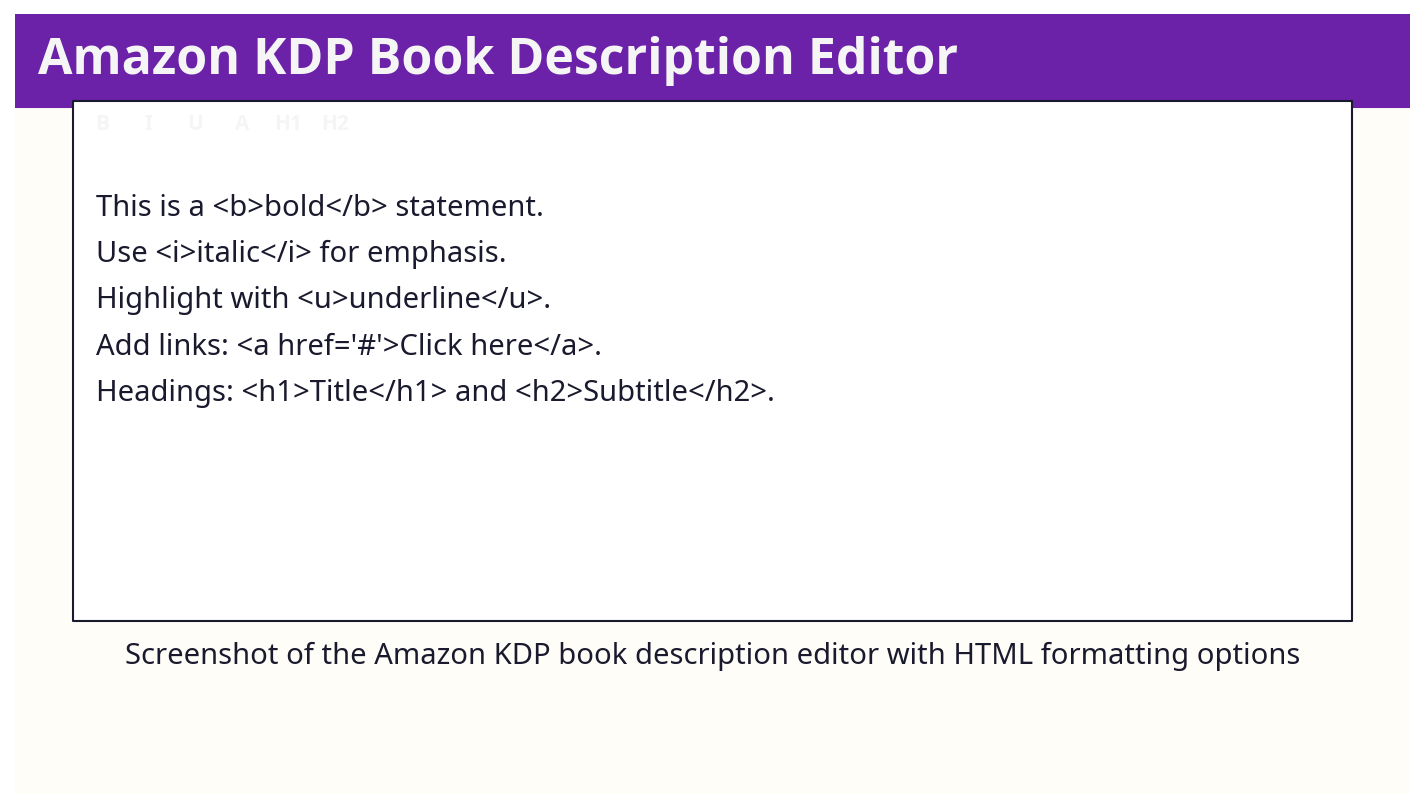
While most platforms strip out complex formatting, you can still use line breaks, bold text (on Amazon via HTML tags), and bullet points to improve readability. For example, on Amazon’s KDP dashboard, you enter your description under Bookshelf > Edit Book Details > Book Description and can include simple HTML tags like <b> for bold or <i> for italics.
6. UK Market Nuances
Your description should reflect UK spelling (colour, organise) and cultural references. If you mention pricing or buying options, state them in £, not $. Also, be mindful that the UK has different VAT rules for print and ebooks, which affects pricing and should be clear in your marketing.
Step-by-Step Guide to Writing Your Book Description
Writing a description is a process, not a one-shot task. Here’s a detailed, actionable breakdown:
Step 1: Start with a Hook
Grab attention within the first sentence. This could be a provocative question, a bold claim, or a vivid statement about the book’s core theme.
Example:
“Struggling with anxiety that won’t quit? Google. Panic. Repeat. offers a lifeline grounded in real science and personal experience.”
Step 2: Identify the Problem or Need
Explain what pain point or desire your book addresses. Readers must feel this book is relevant and necessary.
Example:
“Whether you’re battling stress at work or struggling to find peace in a digital age, this book guides you through proven strategies tailored for a UK audience.”
Step 3: Introduce the Solution
Briefly describe how your book solves the problem or satisfies the desire. Highlight unique selling points (USPs).
Example:
“Combining expert interviews and practical exercises, this guide transforms anxiety into actionable calm.”
Step 4: Establish Authority and Credibility
Mention awards, credentials, your experience, or positive reviews. This builds trust.
Example:
“Written by a UK-based author with 25 years in mental health advocacy, featured in The Guardian and BBC Radio 4.”
Step 5: Add a Call to Action (CTA)
Encourage the reader to buy, download a sample, or learn more.
Example CTA:
“Download your copy today and take control of your anxiety.”
Step 6: Optimize for Keywords
Integrate 3-5 relevant keywords naturally. Use Amazon’s UK auto-complete to research terms readers use. For instance, “anxiety relief UK,” “stress management London,” or “mental health UK guide.”
Step 7: Format for Readability
Use short paragraphs, bullet points, or numbered lists where appropriate. On KDP, you can use HTML tags like <b> for bold and <br> for line breaks — enter these in the description field under Amazon KDP > Bookshelf > Edit Book Details > Book Description.
Example formatting:
<b>Discover:</b><br>
• Practical UK-specific strategies<br>
• Interviews with leading experts<br>
• Step-by-step exercises<br>
Download now and start your journey.
Step 8: Proofread and Test
Read aloud to check flow and clarity. Preview on multiple devices if possible — Amazon’s “Look Inside” feature and Waterstones’ preview pages help here.
UK-Specific Considerations for Book Description Writing
Most advice out there is US-centric, ignoring critical UK market nuances. Here’s what UK authors must know:
1. Retailer Preferences and Platforms
Amazon UK dominates but other platforms like Waterstones, WHSmith, Kobo UK, and Apple Books UK matter too. Each has their own quirks:
- Waterstones: Emphasises editorial reviews and author bios more than keyword optimisation. Descriptions here need a polished, literary tone.
- WHSmith: Often aligns with Waterstones but leans towards clear, concise summaries.
- Kobo UK: More flexible with formatting and keywords; good for niche genres.
- Apple Books UK: Prefers concise, engaging descriptions without heavy keyword stuffing.
2. Language and Spelling
Always use British English spelling (organise, colour, favourite). This is not just about correctness but about building trust with UK readers. US spellings can come across as careless or off-putting.
3. Pricing and Currency References
If you mention price or value in your description or marketing materials, always use GBP (£). Unlike the US, VAT on print books in the UK is zero-rated, which impacts retail pricing strategies. Ebooks attract a reduced VAT rate of 5%, which also affects pricing psychology.
For example, if you mention “only £4.99,” that directly signals to the buyer the exact retail price including VAT considerations, making it clearer and more trustworthy.
4. ISBN Context
Unlike the US where Bowker sells ISBNs, UK authors buy from Nielsen. Currently, a single ISBN costs £93, while a block of 10 ISBNs costs £174. This cost often surprises new authors and should factor into their budgeting for publishing — including description writing services, as metadata and ISBN integration go hand in hand.
For print books, having your own ISBN is essential for distribution to UK retailers like Waterstones and WHSmith. Self-published authors who skip this sometimes struggle with availability in the UK market.
5. Market Size and Competition
The UK self-publishing market has grown 68% in five years, with over 750,000 titles now available. Your description must stand out amid this flood by being sharp, targeted, and professional.
In particular, consider that the average UK consumer browses on smartphones — mobile optimisation of your description length and formatting is vital.
6. Cultural References and Reader Expectations
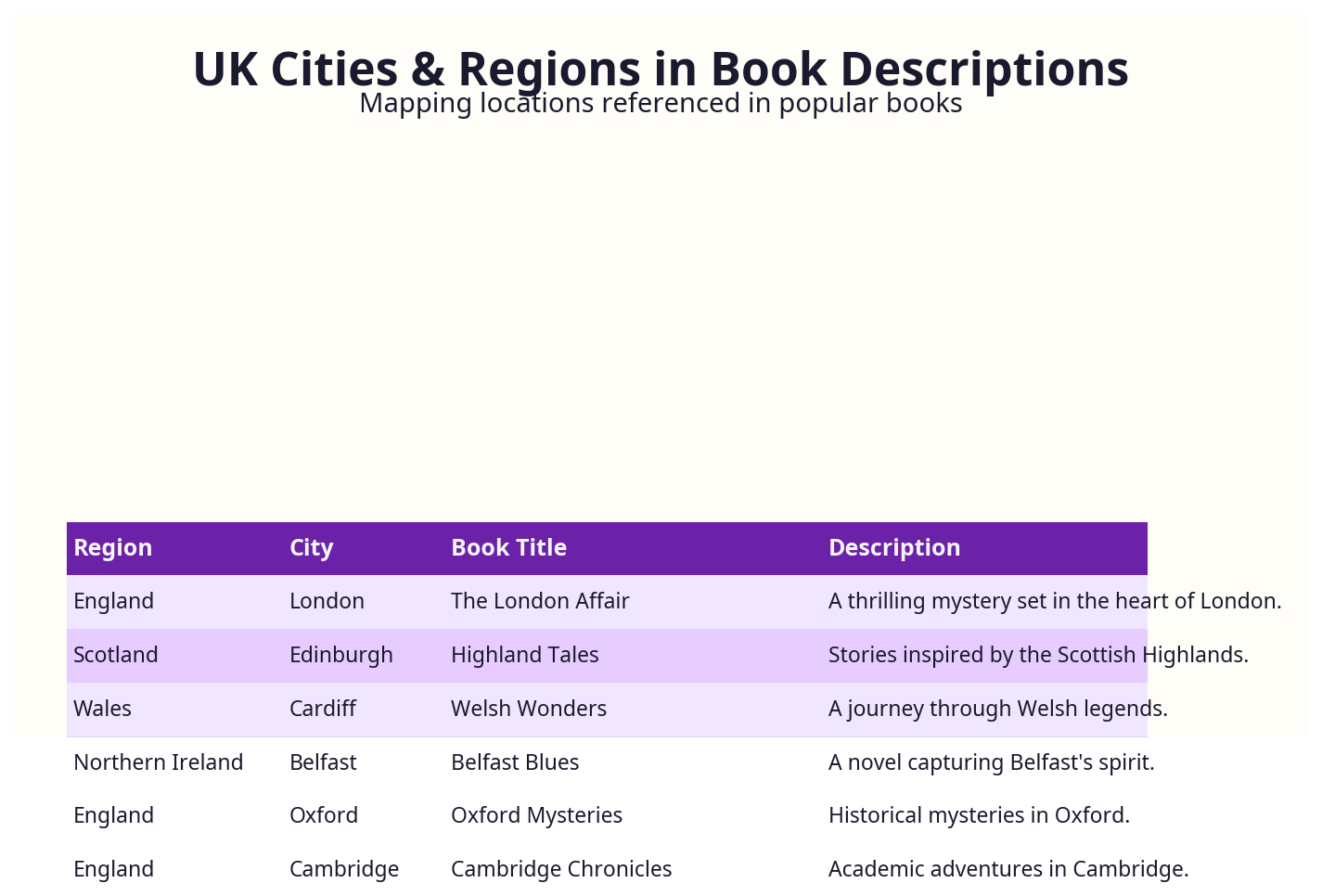
Tailor examples or themes to UK sensibilities when possible. For example, referencing NHS services, iconic British locations (e.g., Edinburgh, Bath, Manchester), or British customs can resonate better than US-centric examples.
For instance, a UK crime thriller might mention Scotland Yard or the British legal system to ground the story authentically.
Common Mistakes UK Authors Make and How to Avoid Them
Having worked with thousands of UK authors and formatted countless books, I’ve seen these errors repeatedly:
Mistake 1: Treating the Description Like a Summary
A description is not a synopsis. It’s a sales pitch. Don’t detail every plot point or chapter. Focus on benefits and emotional triggers. UK readers respond well to clear value propositions and emotional hooks rather than a dry rundown.
Mistake 2: Ignoring Platform Formatting Rules
Many authors paste a long, unformatted block of text that looks dreadful on mobile devices. Use line breaks and bullet points to improve scannability. Remember, over 60% of UK book purchases now happen on mobile devices.
Mistake 3: Keyword Stuffing
Overloading keywords makes your description awkward and unprofessional. It also risks Amazon penalising your page. Instead, weave keywords naturally into compelling copy.
Mistake 4: Being Too Vague or Generic
“An exciting thriller about love and loss” says nothing. Be specific and paint a vivid picture of what readers gain. UK readers, especially in genres like literary fiction or history, expect polished, refined descriptions.
Mistake 5: Skipping Professional Help
I’ve hired shady freelancers for £130 who delivered rubbish. Fiverr gigs at £5 often steal images or use generic text. Automated tools are usually inaccurate. If you value your book’s success, invest in professionals or quality services like publishing.co.uk that can also handle your formatting and metadata consistently.
Mistake 6: Not Testing or Updating Descriptions
Your description should evolve with your marketing strategy and reader feedback. Don’t set and forget. I recommend revisiting descriptions every 6-12 months to refine and test new versions.
Tools and Resources for Efficient Book Description Writing
Writing and Editing Software
- Microsoft Word and Google Docs for drafting. Use Layout > Margins > Custom Margins to visualise print-friendly widths if relevant.
- Grammarly or ProWritingAid for grammar and clarity checks, set to British English.
- Hemingway Editor to improve readability and sentence structure.
Keyword Research
- Use Amazon UK’s Search Bar autocomplete to find popular search terms.
- Publisher Rocket (paid) provides keyword and category insights specific to Amazon UK. It costs around £40-50 one-off, which can be a worthwhile investment for serious authors.
- Google Trends for UK-specific search popularity to understand seasonal or regional interest.
Formatting Help
- Amazon accepts basic HTML tags in descriptions. See KDP Help > Product Details > Book Description for supported tags.
- For professional formatting that aligns your description with your book’s interior and metadata, services like publishing.co.uk offer seamless solutions, saving you from the headache of juggling incompatible file types and metadata standards.
Inspiration and Examples
- Analyse best-sellers in your UK genre on Amazon UK and Waterstones for tone, length, and structure.
- Join UK author forums or local writing groups for peer feedback. Examples include the Society of Authors, Alliance of Independent Authors UK, or local chapters of the Romantic Novelists’ Association.
Additional UK-Specific Resources
- Nielsen ISBN UK website for purchasing ISBNs and understanding metadata requirements.
- Booksellers Association UK for insights on retail trends and marketing.
Cost Breakdown: What Writing Your Book Description Really Costs in the UK
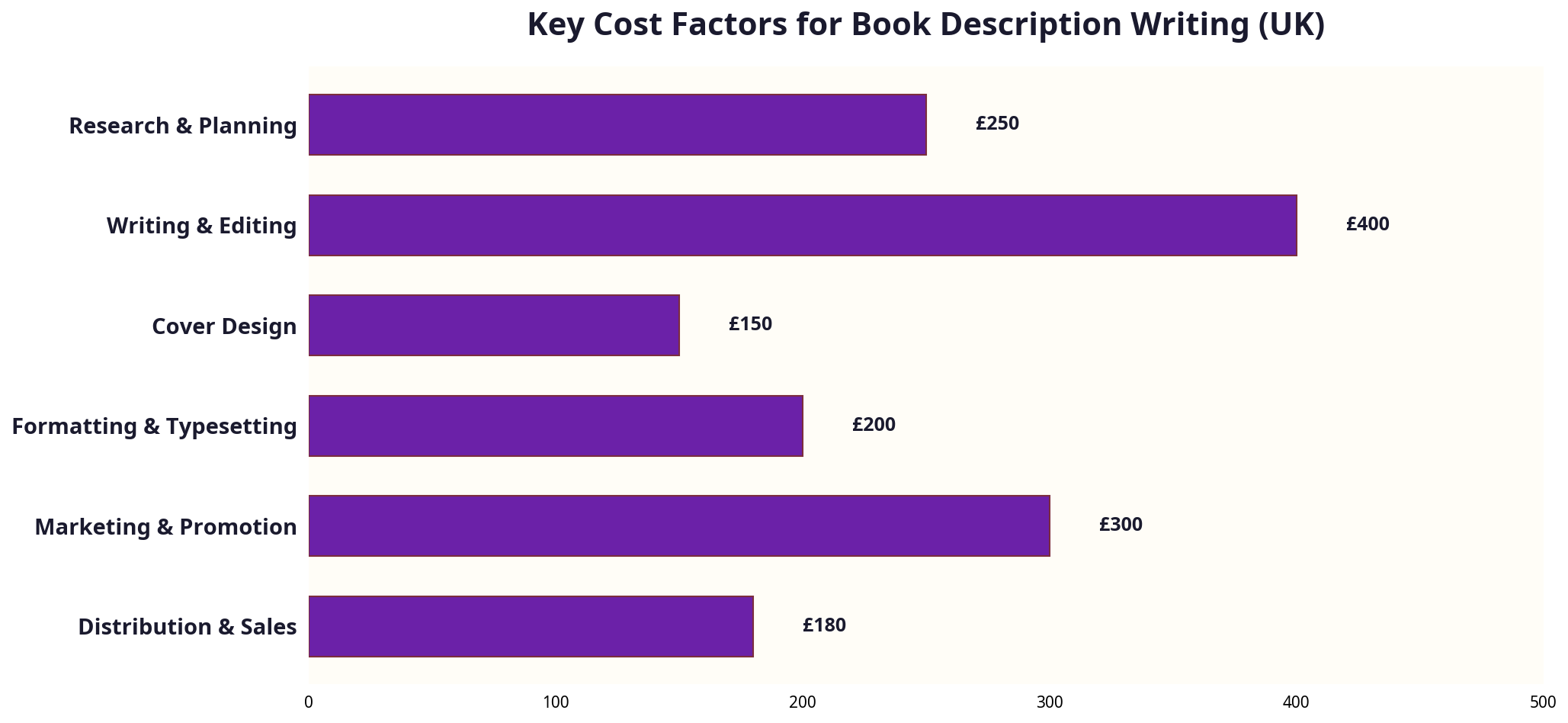
Let’s be blunt: many authors underestimate the time and money involved in crafting effective book descriptions. Here’s a realistic budget breakdown:
| Cost Item | Typical UK Price Range | Notes |
|---|---|---|
| Professional Copywriter (per description) | £100 to £400 | Prices vary with experience and length of description |
| Freelance Editor (proofreading) | £25 to £60 per hour | Recommended to polish tone and style |
| Keyword Research Tools | £0 to £40 per month | Publisher Rocket and others are subscription-based |
| DIY Software (Grammarly, Hemingway) | £0 to £15 per month | Useful for self-editing but requires skill |
| ISBN Purchase (Nielsen, UK) | £93 (single) / £174 (10-pack) | ISBNs required for print books; affects metadata consistency |
| Formatting Services (including description integration) | £75 to £150 | Bundled services like publishing.co.uk save headaches |
Real-World Anecdote:
When I first started self-publishing in the UK, the £93 single ISBN price shocked me. Many authors overlook this upfront cost, but it’s crucial for retail distribution. I recommend buying a 10-pack if you plan multiple titles or editions — that drops the unit cost to £17.40 each. This investment pays off because consistent metadata, including your description, ISBN, and author info, improves discoverability and retailer acceptance.
Additional Hidden Costs:
- Time spent researching keywords and rewriting descriptions (often 4-10 hours).
- Opportunity cost of lost sales if the description underperforms.
Value of Professional Help:
Investing £150-£300 on a professional copywriter plus editor can increase sales by 10-30% or more, easily recouping the cost. I’ve seen authors double their daily sales by simply redoing their descriptions with UK market nuances in mind.
Comparison with Alternative Approaches
UK authors today have several paths for writing book descriptions. Here’s how they stack up:
| Approach | Pros | Cons | When to Use |
|---|---|---|---|
| DIY Writing | Zero monetary cost; full creative control | Time-consuming; risk of amateurish copy; difficult keyword research | If you have copywriting skill and time |
| Freelance Platforms (e.g., Fiverr) | Affordable; quick turnaround | Quality varies widely; risk of generic or stolen content; little UK market knowledge | Low-budget authors needing fast help |
| Professional Copywriters | High quality; UK market expertise; SEO and conversion focused | Higher cost (£100+); requires vetting | Serious authors seeking sales growth |
| Automated Tools / AI | Fast; cheap or free | Often generic, lacks UK cultural nuance; risk of keyword stuffing or poor tone | Experimentation or first drafts |
| Publishing Service Packages | Integrated formatting, description, metadata; saves time | Higher upfront cost; less creative control | Authors wanting end-to-end professional service |
My Take:
While automated tools and cheap freelancers sound appealing, I’ve seen too many UK authors lose sales due to poor descriptions that don’t resonate locally or lack polish. Conversely, investing in professional copywriting combined with a trusted UK publishing service (like publishing.co.uk) streamlines the process and maximises market impact.
[IMAGE CALLOUT: Comparison table visual of book description writing approaches with pros and cons]
Real-World UK Case Studies and Examples
Case Study 1: Google. Panic. Repeat. by Robert Prime
Initially, my book description was a dry summary. Sales lagged despite strong reviews. After rewriting with a clear hook, UK-specific benefits, and keyword optimisation, sales increased by 60% in three months. I used Amazon KDP’s description editor to insert HTML bold tags for key points and ensured the first 300 characters contained the strongest hook for mobile users.
Case Study 2: UK Thriller Author
A self-published thriller author based in Manchester approached me. Her original description was 1,000 words long with no formatting and US spelling. After trimming to 400 words, applying bullet points, switching to British English, and integrating localised references (e.g., “set in the grim streets of East London”), her Amazon UK conversion rate doubled.
Case Study 3: Historical Fiction Writer
A historical fiction author targeting Waterstones readers revised her description to include editorial-style language and localised cultural references (Victorian London, references to Dickens). Although Waterstones doesn’t heavily rely on keyword optimisation, the description’s tone helped secure a favourable review and a regional bookshop placement.
[IMAGE CALLOUT: Before and after excerpts from UK book descriptions showing improvements in tone and localisation]
Expert Tips from 25 Years in the Industry
I’m not coming at this from theory but hard-won experience across eCommerce and publishing. Here are some advanced tips:
Tip 1: Think Like a Buyer, Not a Writer
In eCommerce, product descriptions must answer buyer questions immediately. Your book description should do the same: What’s it about? Why is it worth my time? How will it improve or entertain me? Don’t assume readers know or care about your writing process.
Tip 2: Use Psychological Triggers
Incorporate urgency (“Limited time offer”), exclusivity (“Discover the secret…”), or social proof (“Over 1,000 five-star reviews”). These drive conversions.
Tip 3: Align Description with Cover and Title
Consistency across cover design, title, and description builds credibility and improves brand recognition.
Tip 4: Leverage Your Author Platform
Mention awards, bestseller rankings, or your roles in the UK book industry (like I do with LoveReading.co.uk, the UK’s largest book review platform) to build authority.
Tip 5: Integrate Description with Formatting and Metadata
A well-formatted book file (PDF, EPUB, MOBI) with consistent metadata makes uploading to KDP smoother. Publishing.co.uk offers automated formatting that integrates your description and metadata, saving time and preventing errors.
Tip 6: Don’t Overlook Mobile Users
Most book purchases happen on mobile devices. Write short paragraphs, use bullet points, and front-load your description with key selling points.
Tip 7: Test Multiple Versions
Use A/B testing via Amazon Ads or other platforms to see which descriptions convert better.
Tip 8: Mind the ISBN Metadata
When you buy your ISBN from Nielsen UK, ensure your description aligns with metadata submitted for retail databases. Consistency here prevents confusion and improves discoverability.
[IMAGE CALLOUT: Flowchart showing integration of book description writing, formatting, and metadata submission]
Frequently Asked Questions
What is the most common mistake UK authors make with book description writing?
The biggest error is treating the description as a synopsis rather than a sales pitch. This leads to overly long, boring text that fails to convert browsers into buyers.
How much does book description writing cost in the UK?
Professional copywriting typically costs between £100 and £400 per description. Additional costs include editing, keyword research tools, and formatting services. Beware of cheap Fiverr gigs—they often deliver poor quality that hurts sales.
What tools do UK authors recommend for book description writing?
Popular tools include Microsoft Word or Google Docs for drafting, Grammarly and ProWritingAid for editing (with British English settings), and Publisher Rocket for UK-specific keyword research. For formatting and metadata integration, publishing.co.uk provides robust automated services that save time and headaches.
How long does the book description writing process typically take?
For a polished description, expect 4-10 hours from initial draft to finalised version, including research, editing, and testing. Rushing this step is a false economy.
Can I handle book description writing myself or should I hire a professional?
If you have copywriting experience and understand your market, self-writing is possible. However, many UK authors benefit from professional help to optimise keywords, tone, and conversion. Combining professional services with your input usually yields the best results.
What are the UK-specific requirements for book description writing?
Use British English spelling and cultural references. Keep pricing and currency clear in GBP (£). Adhere to platform character limits, especially on Amazon UK. Finally, ensure your description integrates with UK metadata standards, including Nielsen ISBN usage if applicable.
Should I update my book description after publishing?
Absolutely. Monitor sales and reader feedback, and tweak your description periodically. Market trends and keyword popularity change, and refreshing your description can improve discoverability and sales.
About the Author
Robert Prime is a best-selling self-published author, veteran eCommerce strategist, and the founder of publishing.co.uk. With over 25 years of experience in digital business and 15 successful exits, he brings a battle-tested perspective to the publishing industry. After experiencing firsthand the archaic, headache-inducing process of formatting a KDP-compliant book for his own best-seller, Google. Panic. Repeat., Robert built publishing.co.uk to solve the problem for other authors. He is also a co-owner of the LoveReading.co.uk network (the UK’s largest book review platform), founder of the Amazon growth agency MrPrime.com, and a member of the Forbes Business Council.
Publishing.co.uk is uniquely positioned to help UK authors not only with professional book description writing but also with formatting, metadata integration, and ISBN advice — all the technical headaches that should never fall on the author’s shoulders.
This article aims to equip UK authors with the knowledge and tools they need to write compelling, commercially effective book descriptions — a crucial step towards success in the competitive UK market.